
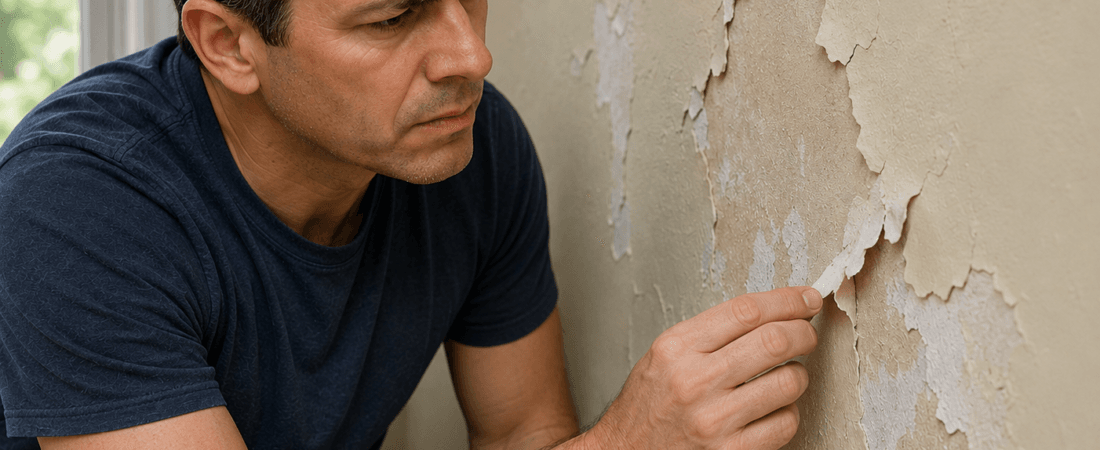
Peeling paint is often more than a cosmetic problem.
Poor surface preparation can cause paint failure, but moisture is another common reason paint begins bubbling, cracking, or separating from a wall.
1. Check for Moisture
Look closely for:
- Dampness
- Water stains
- Bubbling
- Discoloration
- Mold
- Soft drywall
If moisture is present, identify and correct the source before repainting.
2. Consider Humidity
Bathrooms, kitchens, laundry areas, and other humid spaces can be harder on painted surfaces.
Adequate ventilation can help reduce persistent moisture.
3. Check the Surface Underneath
Paint may fail if it was applied over dirt, grease, loose previous coatings, or an improperly prepared surface.
Simply painting over loose material usually does not provide a lasting repair.
4. Consider the Paint Used
Using a coating unsuitable for the surface or environment can contribute to premature failure.
Bathrooms and other moisture-prone areas may require products intended for those conditions.
5. Remove Loose Material Carefully
Before repainting, loose or flaking paint generally needs appropriate preparation.
If the building is older and you are concerned that existing coatings could contain hazardous materials such as lead, seek appropriate guidance before sanding or disturbing them.
When Should You Call a Professional?
Consider professional help if:
- Peeling is widespread
- Water continues entering the wall
- Mold is present
- Drywall or plaster is damaged
- Paint repeatedly fails in the same area
- You are concerned about hazardous older coatings
Fix the underlying cause first. New paint will not permanently solve an active moisture problem.