
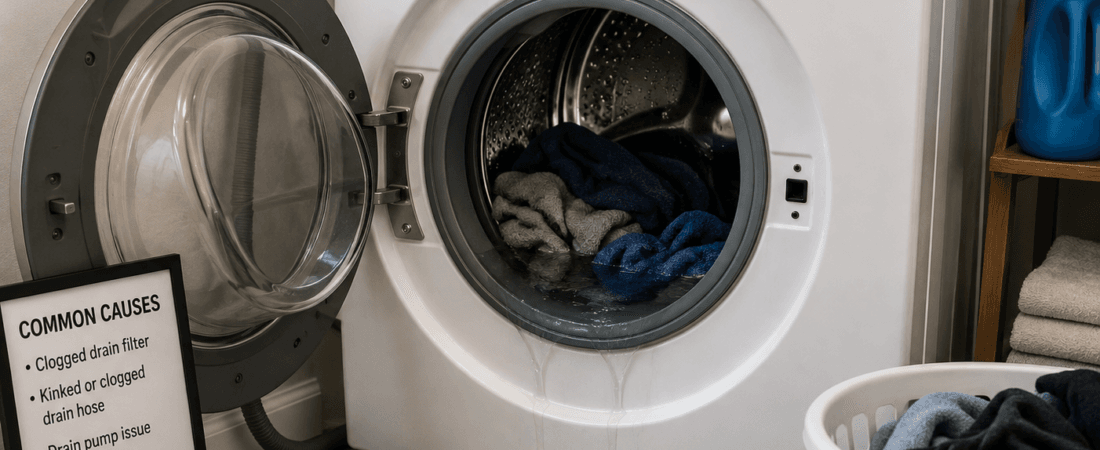
Finding a washing machine full of water after a cycle can be frustrating, but the cause may be something relatively simple.
Start with basic checks before attempting to move or dismantle the appliance.
1. Check the Selected Cycle
Some wash settings may leave clothes wetter than expected or use different spin behavior.
Make sure the cycle completed rather than being paused or interrupted.
2. Check the Drain Hose
Inspect the accessible portion of the drain hose behind the machine.
Look for obvious bends, kinks, or crushing that could prevent water from flowing freely.
Do not disconnect plumbing unless you know how the hose is installed and can safely contain the water.
3. Check for an Unbalanced Load
A badly unbalanced load can prevent some washing machines from completing the spin or drain process normally.
If safe to do so, redistribute the clothing and try the appropriate drain or spin cycle.
4. Check the Washer’s Filter
Some washing machines have a user-accessible pump or debris filter.
Consult the owner’s manual before opening it because trapped water may drain rapidly when the filter is removed.
5. Listen to the Drain Pump
When the washer should be draining, listen for unusual humming, grinding, or silence.
A blocked or failing drain pump may prevent water from leaving the machine.
6. Don’t Force the Door Open
If a front-loading washer remains full of water and the door is locked, do not force it open.
The lock may be preventing a large amount of water from spilling onto the floor.
When Should You Call an Appliance Technician?
Consider professional service if:
- Water remains after repeated drain attempts
- The pump makes unusual noises
- The machine displays a recurring drain error
- The drain hose appears clear but the problem continues
- Water is leaking from underneath the machine
- The washer repeatedly fails to complete cycles
Avoid dismantling the pump or electrical components unless you are qualified to repair the appliance.