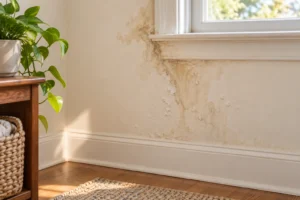
Use a musty smell as a reason to investigate moisture, not as a diagnosis of a mold species or a reason to buy a deodorizer. Record where it is strongest, when it appears, and any recent leak or wet material. A localized cupboard odor, a room-wide damp smell and an odor linked to cooling operation need different investigations.
Separate an odor concern from an emergency
If the smell may be gas or electrical burning, or an alarm sounds, follow the appropriate local emergency procedure rather than continuing a musty-odor search. Leave for a suspected gas leak without operating electrical switches. Keep away from wet electrical equipment and unstable water-damaged material.
Do not sniff close to suspected growth, enter an unsafe crawlspace, climb into a confined area, or open an appliance to locate the smell. If health concerns affect who can investigate or clean, obtain health-professional advice before cleanup. A smell alone cannot diagnose an illness or prove the room is safe.
Map the pattern without disturbing materials
Record the room, approximate area, timing and weather. Note whether it began after a flood, leak, wet laundry, storage change or equipment service. Look only at safely accessible surfaces for staining, peeling, damp items or visible growth. Do not pull wallpaper off or cut an opening to find what is behind it.
EPA’s mold-investigation guidance identifies damp areas, past water damage and musty odors as reasons to investigate, including possible hidden growth. It warns that disturbing hidden areas can spread contamination and may require an experienced professional. This supports a moisture investigation; it does not identify the source from an odor alone.
If it is concentrated in stored items or a cupboard
Check the history of wet towels, shoes, laundry or belongings stored before fully dry. Inspect ordinary accessible items without shaking or brushing suspected growth into the room. Follow the item’s care instructions if normal washing is appropriate; damaged or contaminated porous items may require specialist advice.
Look for a damp wall, floor or plumbing area around the storage space. Removing one item can reduce odor without resolving a nearby leak. Avoid moving a heavy cupboard, placing fans on suspect material, or sealing the area with a fragrance product to hide the smell.
If the smell follows rain or a plumbing leak
Report the timing and visible water damage using the damp-wall guide. Water can remain in carpet backing, a cabinet, a wall or other material after a surface appears dry. The scope of recovery should address what became wet, not only the visible patch.
If the source is concealed, there is substantial damage, or the water was contaminated, use a suitable investigation/restoration professional. Do not attempt a cosmetic seal, tear out suspect material or dry an uncertain water-damaged assembly from general advice.
If it seems linked to heating or cooling
Record when the odor was already noticed and which rooms or outlets were affected; do not run the system to reproduce it. If you know or suspect that the HVAC system is contaminated with mold, stop using it and arrange appropriate professional assessment. EPA warns that operating a contaminated system can spread mold. Do not spray perfume, bleach or a cleaner into ducts or an indoor unit.
EPA’s duct-cleaning guidance explains that routine cleaning is not automatically beneficial and that moisture conditions and evidence of contamination matter. Ask a provider to explain the observed condition and proposed scope rather than buying a generic duct treatment from the smell alone.
Do not substitute a home test for source assessment
EPA’s sampling guidance says visible growth generally does not require routine sampling and that sampling protocols and interpretation require appropriate experience. If testing is proposed, ask what question it answers and how the result would change the work. A consumer plate result does not locate a leak or confirm that hidden material is sound.
Color, odor strength and a single air or surface result should not be used to rank toxicity or guarantee safety. Record visible observations accurately and let an appropriate professional establish uncertain material conditions. Do not use an ozone machine or a masking fragrance as a repair for moisture.
Confirm the odor source was corrected
Ask for the moisture source, affected-material assessment, correction and cleanup/drying scope in the service record. Compare the room through the conditions that previously brought the odor back. A pleasant scent immediately after cleaning is not evidence that the source was fixed.
If the odor returns, provide the timeline and earlier findings for reassessment. For visible recurring bathroom growth, use the bathroom mold guide; the goal is a corrected moisture problem and appropriate material recovery, rather than repeatedly deodorizing the same area.