
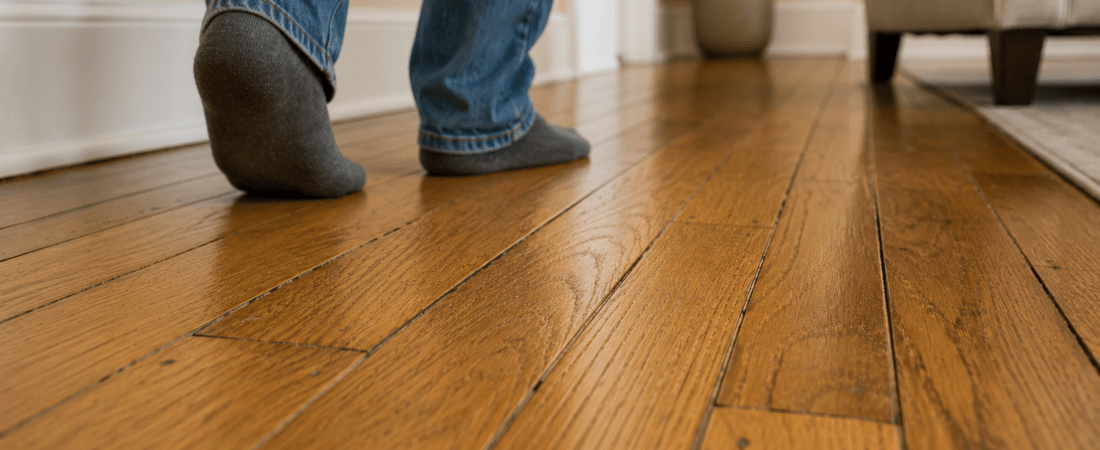
A squeaking floor usually occurs when parts of the flooring system move and rub against each other.
Some squeaks are simply annoying, while new or widespread floor movement may deserve closer attention.
1. Identify the Location
Walk slowly across the area and determine where the sound is strongest.
A localized squeak may be easier to diagnose than noise occurring throughout an entire room.
2. Consider the Flooring Type
Hardwood, laminate, engineered flooring, and carpeted floors can develop noises for different reasons.
Movement may occur between floorboards, the subfloor, fasteners, or structural components underneath.
3. Consider Humidity
Wood expands and contracts as moisture conditions change.
Seasonal changes can sometimes make floor noises more noticeable.
4. Check for Loose Flooring
Look for visible movement when someone walks across the affected area.
Do not pull up flooring simply to investigate a minor squeak unless you understand how it is installed.
5. Look for Other Symptoms
Pay more attention if squeaking occurs along with:
- Noticeable floor movement
- Sagging
- Soft areas
- Water damage
- Cracked flooring
- Sudden changes in several areas
When Should You Call a Professional?
Consider professional assessment if:
- The floor feels soft or unstable
- Sagging is visible
- Water damage is present
- Squeaking suddenly becomes widespread
- The floor moves significantly when walked on
- You suspect structural damage underneath
Many floor squeaks are caused by ordinary movement, but changes in the feel or stability of the floor should not be ignored.