
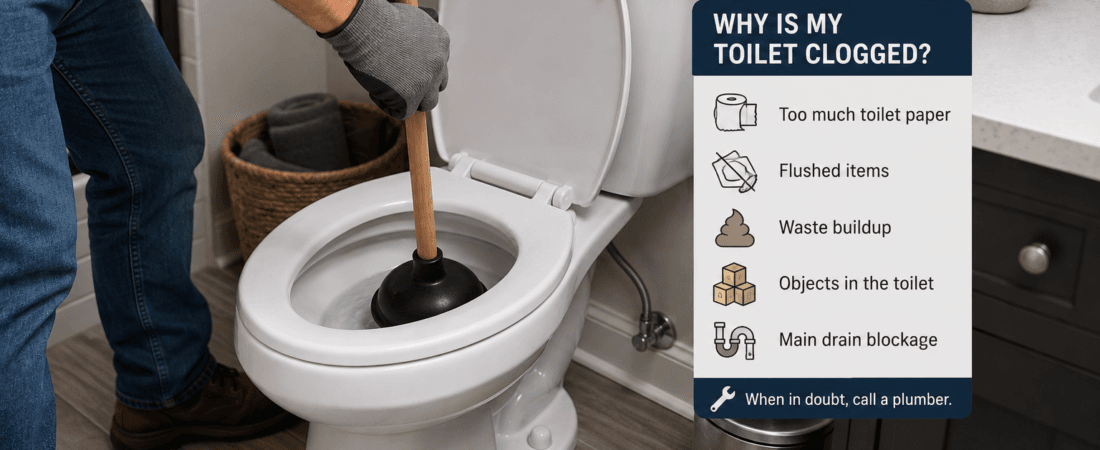
A clogged toilet is one of the most common plumbing problems in a home. Sometimes the blockage is minor and can be cleared quickly, while other clogs may indicate something deeper in the drain system.
Before repeatedly flushing the toilet, stop and determine how serious the blockage may be.
1. Don’t Keep Flushing
If the water level rises after flushing, do not flush again.
Repeated flushing can cause the toilet bowl to overflow and create a much larger mess.
Wait for the water level to drop before attempting anything else.
2. Use a Toilet Plunger
A toilet plunger with a flange at the bottom generally creates a better seal than a flat sink plunger.
Place the plunger over the drain opening and make sure there is enough water in the bowl to cover the rubber portion.
Push and pull firmly several times while maintaining the seal.
After plunging, test the toilet carefully rather than immediately flushing several times.
3. Give the Blockage Time to Soften
Some clogs caused by toilet paper or waste may gradually break down when left sitting in water.
If the toilet is not overflowing, waiting for a while before plunging again may make the blockage easier to clear.
4. Avoid Adding More Material
Do not add additional toilet paper or waste while the toilet is clogged.
Also avoid pouring random household chemicals into the toilet. Some products can damage plumbing components or create a hazardous situation if you later need to work on the blockage.
5. Consider Whether an Object Was Flushed
Items that should not normally be flushed can become lodged inside the toilet or drain.
Common examples include:
- Wipes
- Paper towels
- Sanitary products
- Cotton products
- Small toys or objects
- Excessive amounts of toilet paper
Even products labeled as flushable can sometimes contribute to plumbing blockages.
6. Watch for Problems With Other Drains
If the toilet is clogged and you also notice:
- Water backing up into a shower or bathtub
- Gurgling from nearby drains
- Several slow drains at the same time
- Sewage odors
- Repeated toilet clogs
the problem may be farther down the drainage system rather than inside the toilet itself.
When Should You Call a Plumber?
Consider calling a licensed plumber if:
- Plunging does not clear the clog
- The toilet repeatedly becomes clogged
- An object may be stuck inside the toilet
- Water backs up into other fixtures
- Multiple drains are affected
- Sewage is backing up
- The toilet is close to overflowing and you cannot control the water
Many ordinary toilet clogs can be cleared with a proper plunger, but recurring or widespread drainage problems may indicate a blockage that requires professional attention.