
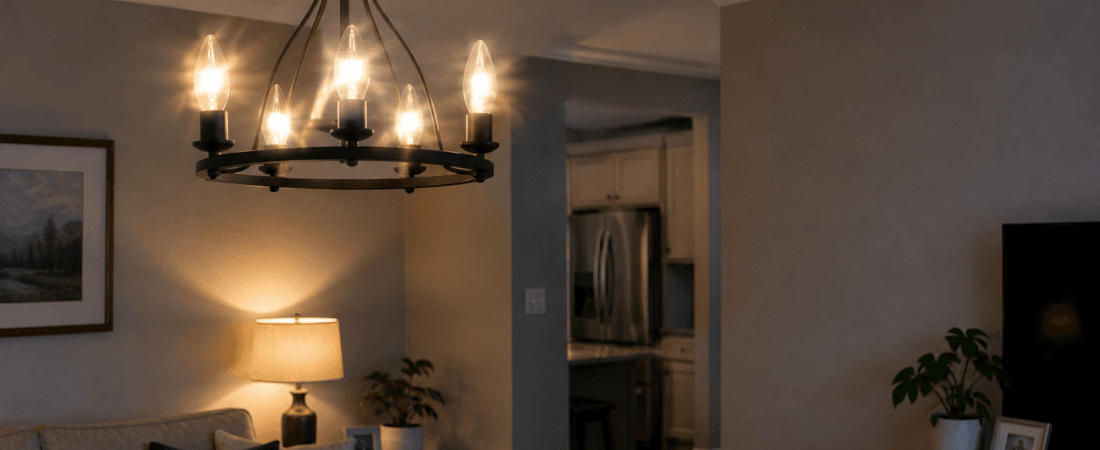
A light that flickers occasionally may have something as simple as a loose bulb. But flickering involving several lights or occurring repeatedly can sometimes indicate an electrical problem.
The pattern of the flickering provides useful clues.
1. Check the Bulb
Turn the light off and allow the bulb to cool.
If the bulb is designed to be replaceable, make sure it is properly seated.
A failing bulb can also flicker and may simply need replacement.
2. Consider the Type of Bulb
Some LED bulbs may flicker when used with incompatible dimmer switches.
If the problem started after changing bulbs, check whether the replacement bulb is suitable for the fixture and dimmer.
3. Notice Whether One or Several Lights Flicker
One flickering fixture may indicate a problem localized to that bulb, fixture, or switch.
Several lights flickering at the same time can indicate a broader electrical issue and deserves greater attention.
4. Notice When It Happens
Do the lights flicker when a large appliance starts?
Brief changes can sometimes occur when equipment with a high electrical demand turns on.
Frequent or severe flickering should still be investigated.
5. Check for Other Warning Signs
Take the problem more seriously if flickering occurs with:
- Buzzing
- Burning smells
- Warm switches or outlets
- Sparks
- Frequently tripped breakers
- Lights becoming unusually bright or dim
Do not open electrical panels or outlets to investigate these symptoms yourself.
When Should You Call an Electrician?
Contact a qualified electrician if:
- Several lights flicker
- Flickering is frequent or worsening
- Lights dramatically brighten and dim
- You smell burning
- Switches or outlets become hot
- Breakers repeatedly trip
- You hear buzzing or crackling
Persistent flickering can sometimes be more than an annoying lighting problem, particularly when multiple circuits or other electrical symptoms are involved.