
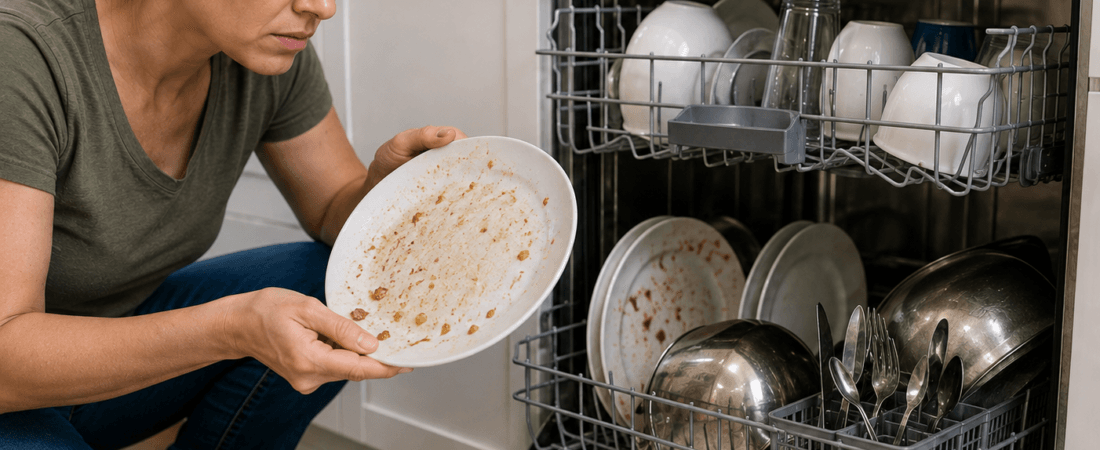
A dishwasher that completes its cycle but leaves food or residue behind may not necessarily need replacing.
Loading, water temperature, filters, spray arms, and detergent can all affect cleaning performance.
1. Avoid Overloading the Dishwasher
Dishes need enough space for water to reach their surfaces.
Items packed too closely together can block spray patterns.
2. Check the Spray Arms
Make sure dishes, utensils, or cookware are not preventing the spray arms from rotating.
If your model allows user cleaning, inspect accessible spray holes for visible debris according to the manufacturer’s instructions.
3. Clean the Filter
A dirty filter can allow food debris to circulate or reduce dishwasher performance.
Remove and clean user-serviceable filters regularly according to the appliance instructions.
4. Use Appropriate Dishwasher Detergent
Use detergent intended specifically for automatic dishwashers.
Follow the manufacturer’s recommendations for the amount and type.
5. Check Water Temperature
Dishwashers rely on sufficiently warm water for effective cleaning.
If hot water elsewhere in the home is unusually cool, the problem may involve the home’s hot-water supply rather than the dishwasher.
6. Load Dishes Correctly
Large pans, cutting boards, and other items can block water from reaching nearby dishes.
Place items according to the rack layout recommended by the dishwasher manufacturer.
When Should You Call an Appliance Technician?
Consider professional service if:
- Dishes remain dirty despite proper loading
- Spray arms do not appear to operate correctly
- Water does not become warm
- The dishwasher does not fill properly
- Unusual noises occur
- Cleaning performance suddenly deteriorates
Basic cleaning and loading adjustments can solve many dishwasher performance problems, but persistent issues may require appliance service.