
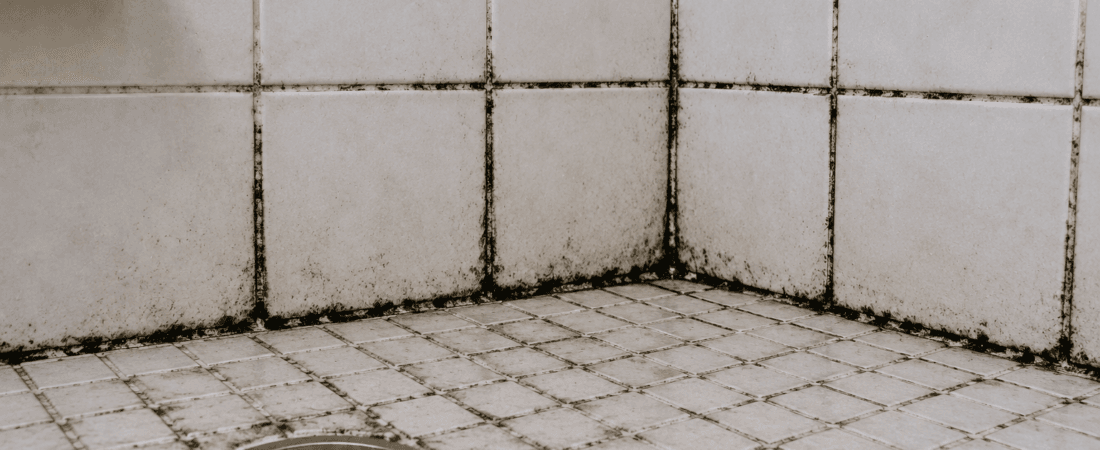
Dark or black grout can develop when dirt, soap residue, mildew, or mold accumulates on damp surfaces.
Bathrooms and other wet areas are particularly susceptible.
1. Determine Whether It Is Dirt or Growth
Grout can darken simply from accumulated dirt.
If discoloration repeatedly returns in damp areas, moisture and biological growth may also be contributing.
2. Clean the Grout
Use a cleaning product appropriate for the grout and surrounding tile.
Follow the product instructions and provide adequate ventilation.
Never mix bleach with ammonia, acids, or other incompatible cleaning chemicals.
3. Keep the Area Dry
After bathing, allow the shower or tiled area to dry.
Ventilation and removal of excess water can help reduce persistent dampness.
4. Check for Leaks
If grout remains wet even when the shower has not been used, investigate whether water may be leaking from plumbing or entering behind the tile.
5. Check the Grout Condition
Cracked, missing, or deteriorated grout may allow moisture into areas where it does not belong.
Damaged grout may need repair rather than cleaning alone.
When Should You Call a Professional?
Consider professional help if:
- Black discoloration repeatedly returns
- Grout is badly cracked or missing
- Tiles become loose
- The wall feels soft
- There is a persistent musty smell
- You suspect moisture behind the tile
Regular cleaning can improve surface discoloration, but recurring problems may require better moisture control or repair.