
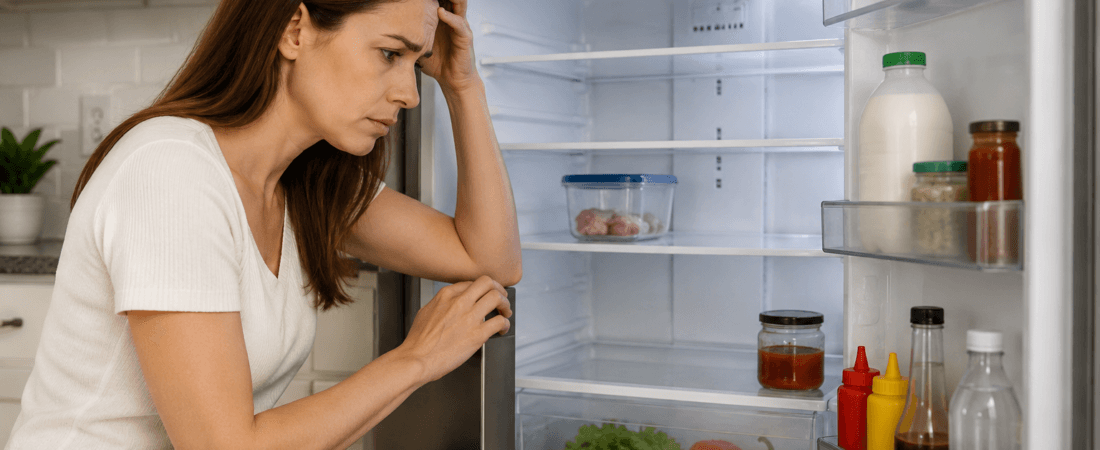
A refrigerator that is running but not keeping food cold can have several possible causes. Some are simple things you can check yourself before assuming the appliance needs repair.
1. Check the Temperature Setting
Make sure the refrigerator temperature has not accidentally been changed.
A refrigerator is generally intended to keep food at about 40°F (4°C) or below.
After adjusting the setting, allow time for the refrigerator temperature to stabilize.
2. Check Whether the Door Is Closing Properly
Make sure nothing inside the refrigerator is preventing the door from closing completely.
Check the door seal for food, dirt, damage, or gaps that could allow cold air to escape.
3. Avoid Overpacking the Refrigerator
Cold air needs room to circulate.
If containers and food are packed tightly against vents or the back of the refrigerator, airflow may be restricted.
Rearrange items so air can move more freely.
4. Check for Blocked Air Vents
Many refrigerators circulate cold air between compartments through vents.
Make sure food packages are not covering these openings.
5. Listen to the Refrigerator
You may normally hear the compressor or fans operating periodically.
If the refrigerator is unusually silent for long periods, constantly running, clicking repeatedly, or making unfamiliar noises, there may be a mechanical problem.
6. Check for Excessive Frost
Heavy frost buildup inside the freezer can interfere with airflow and cooling.
If frost repeatedly returns after being removed according to the manufacturer’s instructions, the appliance may have a defrost-system problem.
When Should You Call an Appliance Technician?
Consider professional service if:
- The refrigerator remains warm
- Food is spoiling unusually quickly
- Heavy frost repeatedly develops
- The refrigerator runs constantly
- You hear repeated clicking or unusual noises
- The freezer works but the refrigerator section remains warm
- Basic temperature, door, and airflow checks do not solve the problem
If perishable food has remained above a safe temperature for an extended period, follow appropriate food-safety guidance rather than relying on appearance or smell alone.