
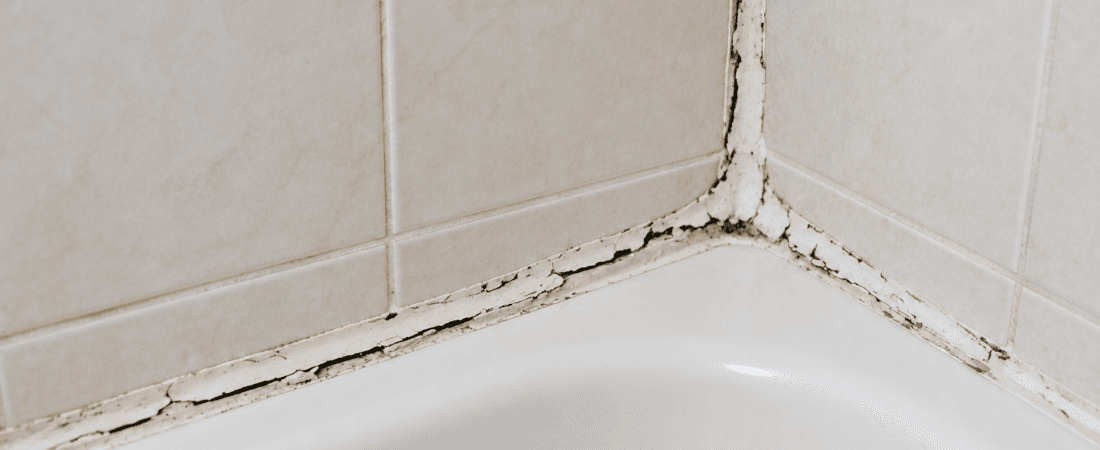
Caulk helps seal joints around tubs, showers, sinks, windows, and other areas.
Over time, it can crack, shrink, separate, or peel away from the surfaces it is supposed to protect.
1. Consider the Age of the Caulk
Caulk does not last forever.
Repeated exposure to moisture, cleaning products, temperature changes, and movement can eventually cause it to deteriorate.
2. Check for Moisture
Caulk applied to a damp or contaminated surface may not adhere properly.
If moisture is entering from behind the joint, simply applying another layer may not solve the problem.
3. Don’t Caulk Over Loose Caulk
Applying fresh caulk directly over material that is already peeling usually creates a poor repair.
Old loose material generally needs appropriate removal and surface preparation first.
4. Use the Correct Product
Different locations require different types of sealant.
Bathrooms and other wet areas typically require products designed for repeated moisture exposure.
5. Allow Proper Curing Time
Fresh caulk needs sufficient time to cure before being exposed to water.
Follow the manufacturer’s instructions rather than using the shower or sink immediately.
When Should You Call a Professional?
Consider professional help if:
- Caulk repeatedly separates
- Water is entering behind a tub or shower
- Surrounding walls are soft or damaged
- Mold repeatedly develops
- The joint itself is moving significantly
- You suspect hidden water damage
Replacing deteriorated caulk can be straightforward, but an active moisture problem should be corrected before resealing the area.