
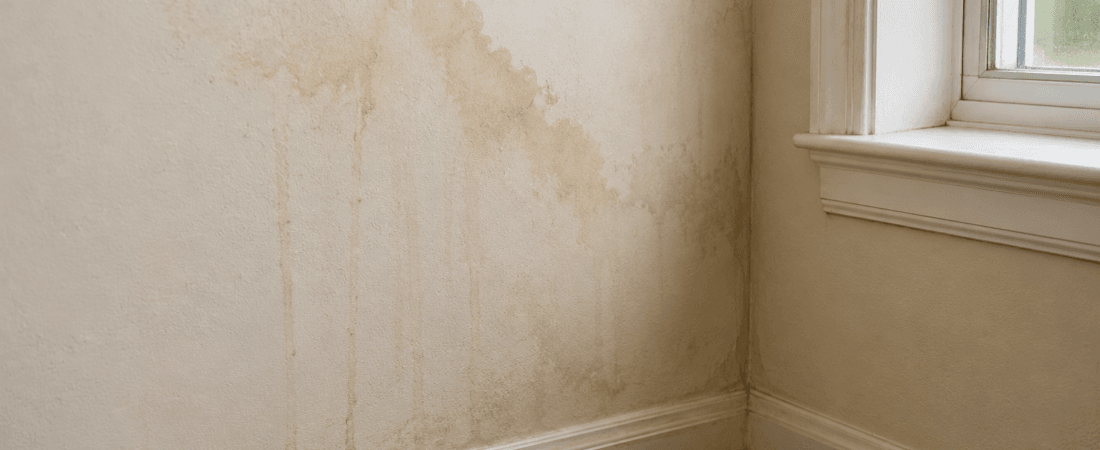
Water stains on walls are usually a sign that moisture has entered or accumulated behind the finished surface.
The stain may remain even after the area dries, so determining whether the moisture source is still active is important.
1. Look at the Location
The stain’s position can provide clues.
A stain near the ceiling may originate from above, while one near plumbing fixtures may indicate a pipe or connection problem.
2. Note When It Changes
Pay attention to whether the stain becomes darker or larger:
- During rain
- After someone showers
- When plumbing fixtures are used
- When the AC operates
- Without any obvious pattern
Timing can help identify the source.
3. Check for Dampness
Look for additional signs such as:
- Bubbling paint
- Peeling paint
- Soft drywall
- Musty odors
- Mold
- Swollen trim
These may indicate ongoing or repeated moisture exposure.
4. Check Nearby Plumbing
Bathrooms, kitchens, laundry rooms, and water-using appliances are common areas for hidden leaks.
Inspect accessible plumbing without opening walls unnecessarily.
5. Consider Exterior Water Entry
Stains on exterior-facing walls may be related to rain entering through damaged seals, windows, roofing, siding, or other building components.
6. Don’t Paint Over an Active Problem
Once the moisture source has been repaired and the wall has dried appropriately, cosmetic repairs can be considered.
Painting over an active leak will only hide the evidence temporarily.
When Should You Call a Professional?
Consider professional help if:
- The stain continues spreading
- The wall remains wet
- You suspect a hidden plumbing leak
- Water enters during rain
- Mold develops
- Electrical outlets or wiring are affected
- Drywall becomes soft or damaged
Water stains are clues. Finding the source of the moisture is the most important part of preventing additional damage.