
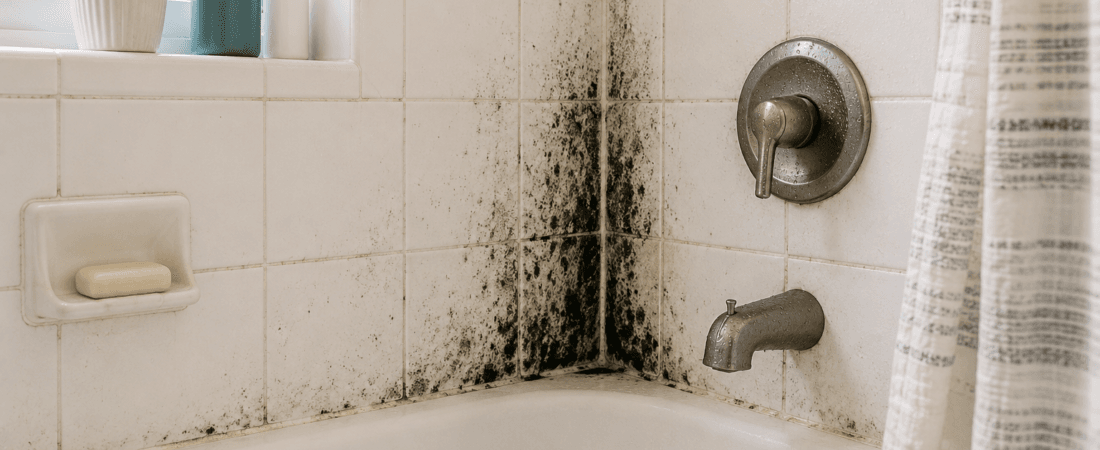
Bathrooms provide many of the conditions mold needs: moisture, warmth, and surfaces that may remain damp after bathing.
If mold repeatedly returns after cleaning, controlling the moisture source is essential.
1. Use the Exhaust Fan
Run the bathroom exhaust fan during showers or baths and leave it running for a while afterward.
The fan should move moist air out of the bathroom rather than simply circulate it.
2. Allow Surfaces to Dry
Water can remain on shower walls, tiles, curtains, windows, and other surfaces.
Removing excess water and allowing these areas to dry can reduce the amount of time they remain damp.
3. Check the Exhaust Fan
If the bathroom stays steamy for a long time, the exhaust fan may not be moving enough air.
A dirty, blocked, damaged, or improperly vented fan may perform poorly.
4. Look for Leaks
Persistent mold in one particular area may indicate more than normal shower humidity.
Check for leaking faucets, shower fittings, toilets, pipes, and signs of water entering walls or ceilings.
5. Clean Mold Promptly
Small amounts of surface mold should not simply be allowed to spread.
Use cleaning methods appropriate for the surface and follow product safety instructions. Never mix cleaning chemicals such as bleach and ammonia.
6. Replace Damaged Materials When Necessary
Porous materials that remain wet or have extensive mold contamination may sometimes need professional assessment or replacement rather than repeated surface cleaning.
When Should You Call a Professional?
Consider professional help if:
- Mold covers a large area
- It repeatedly returns despite controlling humidity
- Walls or ceilings feel damp or soft
- There has been significant water damage
- You suspect mold inside a wall or ceiling
- You cannot identify the moisture source
Cleaning removes visible growth, but controlling moisture is the key to preventing it from continually returning.