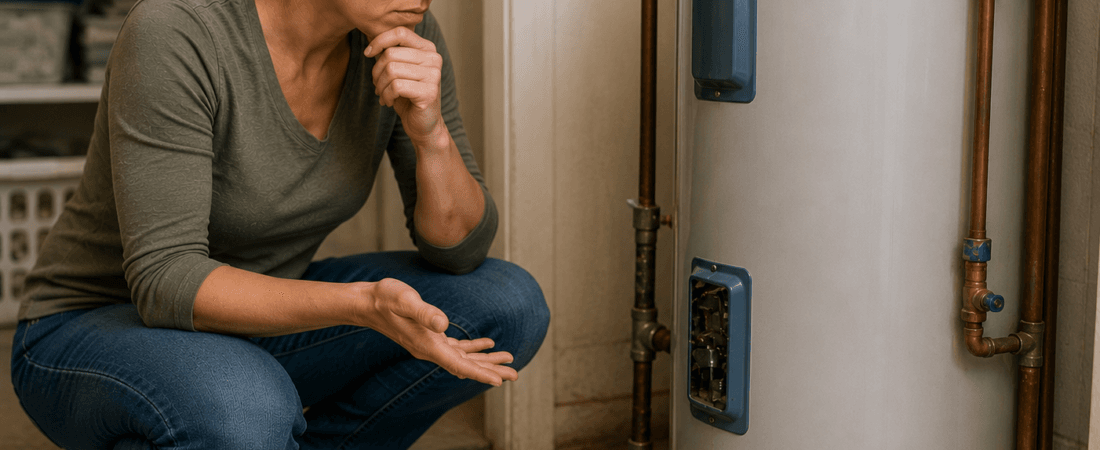
Losing hot water can affect showers, washing, cleaning, and many other household tasks.
The possible cause depends partly on whether you have an electric, gas, tank, or tankless water heater.
1. Determine Whether You Have Any Hot Water
Check more than one faucet.
If only one fixture has a problem, the issue may be with that faucet or shower rather than the water heater.
2. Consider Recent Hot-Water Use
A traditional storage-tank heater can temporarily run out of hot water after several showers or other heavy use.
Allow the heater sufficient time to recover and check again.
3. Check the Temperature Setting
If the unit provides a user-accessible temperature control, make sure it was not accidentally changed.
Avoid setting water temperatures excessively high because hot water can cause serious scalding injuries.
4. For Electric Water Heaters, Check the Breaker
An electric water heater may lose power if its circuit breaker trips.
If you know which breaker supplies the heater, check its position.
A breaker that repeatedly trips should be inspected by a qualified electrician or technician rather than repeatedly reset.
5. For Gas Water Heaters, Follow Manufacturer Instructions
Some gas water heaters use a pilot or electronic ignition system.
Follow the manufacturer’s instructions for checking operation.
If you smell gas, do not attempt to relight or troubleshoot the heater. Leave the area and follow local gas-emergency procedures.
6. Consider the Age of the Heater
Heating elements, thermostats, burners, and other components can eventually fail.
If the basic checks do not identify the cause, professional diagnosis may be needed.
When Should You Call a Professional?
Seek qualified service if:
- There is no hot water
- Hot water runs out unusually quickly
- The breaker repeatedly trips
- The heater displays an error
- You hear unusual noises
- You smell gas
- The problem repeatedly returns
Water heaters combine water with electricity or fuel, so internal repairs should not be attempted without appropriate expertise.