
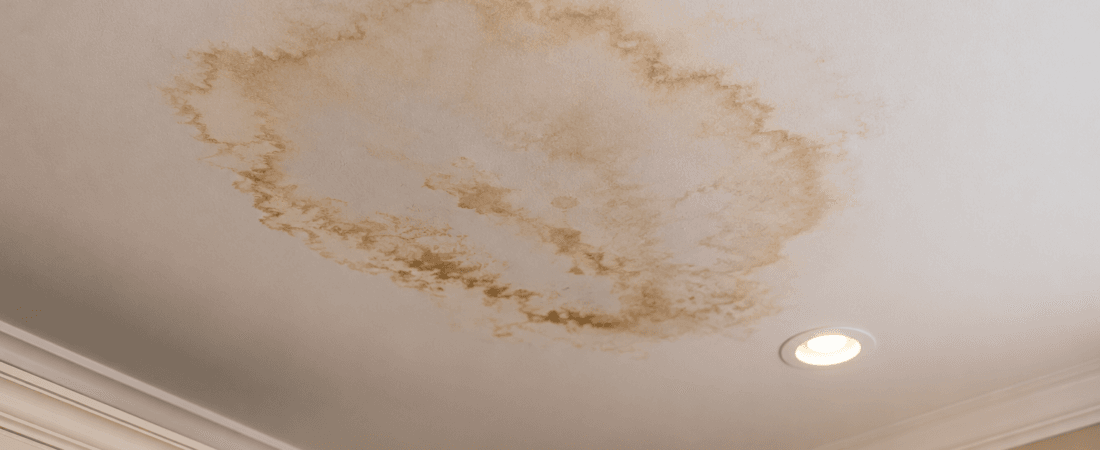
A brown, yellow, or dark stain on a ceiling often indicates that moisture has reached the ceiling material.
The source may be plumbing, a roof leak, an air-conditioning system, or another water problem above the affected area.
1. Determine What Is Above the Stain
Consider what is located directly above the affected area.
Possible sources include:
- A bathroom
- Plumbing pipes
- An air-conditioning system
- A roof
- An upper-floor appliance
- An attic
This can help narrow down where the moisture may originate.
2. Note When the Stain Appears
If the stain becomes wet during rain, a roof or exterior-water problem may be involved.
If it changes when a shower, toilet, or appliance is used, plumbing may be the source.
3. Check Whether the Ceiling Is Wet
Do not aggressively press or puncture a ceiling that appears swollen or saturated.
Water-damaged ceiling material can weaken and potentially fall.
Keep people away from an area that appears unstable.
4. Don’t Simply Paint Over It
Stain-blocking paint may eventually be useful after repairs, but painting does not stop an active leak.
Find and correct the moisture source first.
5. Watch for Electrical Hazards
If water is near ceiling lights, fans, wiring, or other electrical equipment, avoid the area and seek appropriate professional assistance.
When Should You Call a Professional?
Seek professional help if:
- The ceiling is actively dripping
- The stain continues growing
- The ceiling is bulging or sagging
- Electrical fixtures are nearby
- You cannot identify the water source
- Mold or significant material damage develops
A ceiling stain is often evidence of another problem above it, so identifying the source should come before cosmetic repair.