Check whether only this sink is slow, both bowls are affected, or other fixtures are backing up too. A stopper obstruction and a shared drain restriction need different responses. Begin with visible, accessible checks and stop before chemical exposure, overflowing wastewater or leaking pipework turns a small task into a larger problem.
Check for reasons to stop before plunging
If drain cleaner or another chemical has been added, do not plunge, open the trap or add a different product. Keep the product name and tell the plumber. Poison Control explains that corrosive drain cleaners can cause burns and splashback injury. Seek local poison-control or emergency medical advice for an exposure, using the product label’s emergency guidance.
Stop using affected fixtures if sewage appears, several drains back up, the cabinet is leaking or the basin is close to overflowing. Keep people away from wastewater and arrange plumbing help. Do not run a dishwasher into a sink that is backing up.
If the stopper or drain opening is visibly restricted
Check that the stopper reaches its normal open position. Remove only accessible debris using gloves and a suitable non-damaging tool. A removable strainer or stopper should be handled according to its instructions; some assemblies require disconnecting a linkage below. Do not force a fitting or push the material farther into the pipe.
After a simple obstruction is removed, use a small amount of ordinary water to check drainage while watching for leaks from a safe position. Stop if the level rises or water appears underneath. There is no need to fill the entire basin to prove that a minor check helped.
If only one otherwise sound sink remains slow
A sink cup plunger may be suitable where no chemicals are present, the basin and exposed connections are sound, and the drain arrangement is understood. Korky’s sink-plunger guidance describes a flat-drain cup and sealing other basin openings so pressure reaches the blockage. Follow the tool’s instructions and protect against splashes.
For an appropriate simple basin, temporarily cover the overflow and any connected unused bowl drain, use enough water to cover the cup and make controlled strokes while maintaining the seal. Restore all openings afterward. Stop if fittings move, leaks appear, or a brief attempt does not improve drainage. Do not permanently block an air gap or plumbing vent.
A disposal, unusual drain assembly or connected appliance can change the task. Do not put fingers or tools into a powered disposal. Use its isolation and maintenance instructions, or have an appropriate professional assess the arrangement instead of applying ordinary basin instructions blindly.
If both bowls or an appliance connection are affected
Record whether one bowl rises when the other empties, or whether dishwasher discharge produces backup. This can help the plumber determine which shared part of the drainage path needs investigation. It does not establish the blockage’s exact location from the surface.
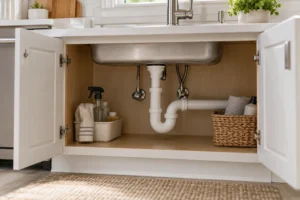
Avoid repeatedly using the disposal or dishwasher to push water through. If a trap needs removal, the scope includes safe handling of retained water, suitable fittings and leak-free reassembly. Leave that work to a plumber if isolation, chemical history or connection condition is uncertain. Do not use compressed-air gadgets or a powered drain machine as a generic next step.
If nearby fixtures also drain poorly
Note which fixtures are involved and the sequence of backup or gurgling. Stop adding water to the affected drainage system and arrange assessment. In an apartment, report whether other units appear affected to the responsible manager. A shared-line or vent problem requires a different investigation from cleaning one sink strainer.
Do not access a roof vent or open an unfamiliar drain cleanout. The plumber may need to check line condition, venting or downstream drainage. Ask what evidence supports that scope rather than assuming every slow sink is grease in the local trap.
If clearing helps briefly but the problem returns
Keep the clearing method and how long normal drainage lasted. Report food waste, hair, recent installation changes and any recurring leaks without assuming these explain every blockage. Ask whether the obstruction was removed, whether a line or installation defect remains and what further inspection is justified.
For prevention, keep grease and solid waste out of the drain, empty strainers and follow disposal instructions where applicable. Do not rely on repeated boiling water or chemical treatments. Verify drainage during normal use and check beneath the sink for fresh leakage after any work; a faster-draining sink with a leaking connection is not a completed repair.