
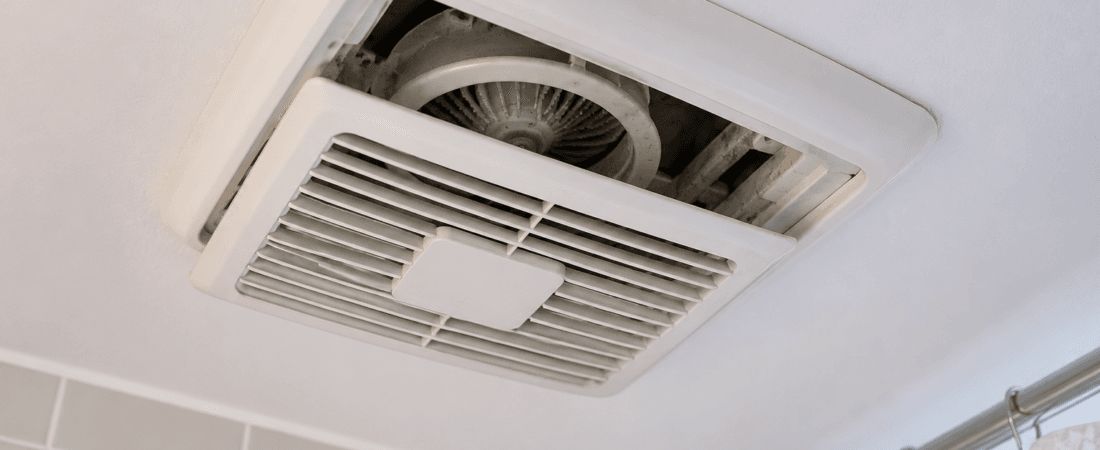
A bathroom exhaust fan helps remove humid air created by showers and baths.
When the fan stops working—or moves very little air—moisture can remain in the bathroom and contribute to condensation, peeling paint, and mold.
1. Make Sure the Fan Has Power
Turn the fan switch on and listen carefully.
If nothing happens, check whether other lights or fixtures on the same circuit are working.
2. Check the Circuit Breaker
If the fan has no power, check for a tripped circuit breaker.
If you know which breaker controls the circuit, it may be reset once.
If it trips again, leave it off and have the electrical problem investigated.
3. Clean the Fan Cover
Dust can accumulate on the grille and restrict airflow.
Turn the fan off before cleaning the accessible cover according to the manufacturer’s instructions.
4. Check Whether It Is Actually Moving Air
A fan can make noise without exhausting enough air.
If the bathroom remains heavily steamed long after a shower, airflow may be inadequate.
5. Listen for Unusual Sounds
Grinding, rattling, squealing, or humming can indicate a worn or obstructed fan.
Turn the fan off if it sounds significantly different from normal.
6. Consider the Exhaust Duct
Bathroom fans should exhaust moist air appropriately.
A blocked, damaged, disconnected, or improperly installed duct can reduce performance.
When Should You Call a Professional?
Consider professional help if:
- The fan does not operate
- The breaker repeatedly trips
- The fan makes grinding or electrical noises
- There is a burning smell
- Moisture remains excessive despite running the fan
- The exhaust duct needs inspection
Electrical repairs and inaccessible ventilation ducts should be handled by appropriately qualified professionals.