
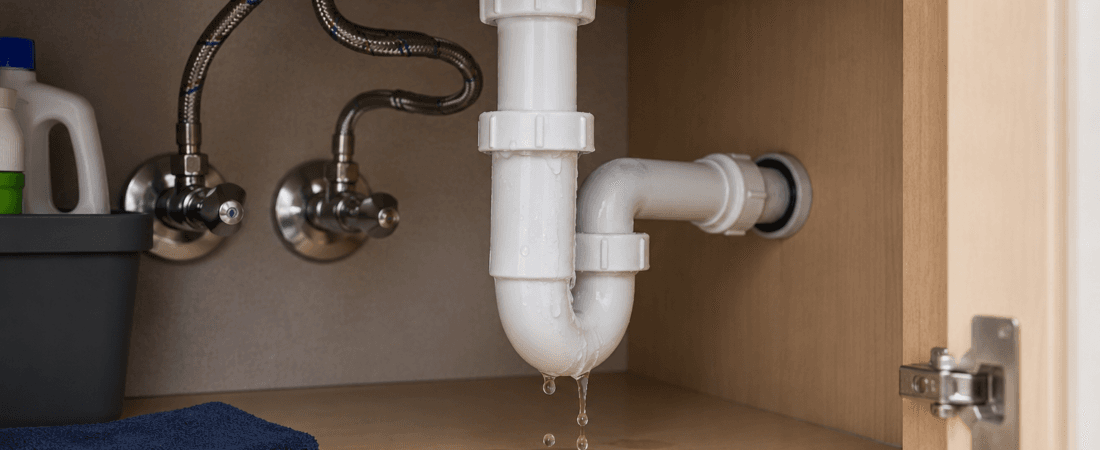
A leak underneath your sink can range from a loose connection to a damaged pipe or drain component. Even a small leak should be addressed because moisture inside a cabinet can damage wood, encourage mold growth, and eventually affect surrounding areas.
The first step is figuring out exactly where the water is coming from.
1. Dry Everything Under the Sink
Remove anything stored underneath the sink and wipe the pipes, fittings, cabinet floor, and surrounding area completely dry.
Then run the faucet while watching underneath.
Starting with a dry area makes it much easier to identify where fresh water first appears.
2. Check the Water Supply Lines
The supply lines carry water from the shutoff valves to the faucet.
Look closely around:
- The shutoff valves
- Connections at the faucet
- Connections along the supply lines
- The lines themselves
If water appears while the faucet is running—or even when it is turned off—a supply connection or line may be leaking.
3. Check the Drain Connections
If the leak happens mainly while water is draining from the sink, inspect the drain pipes and their connections.
Look for droplets forming around joints or fittings.
A loose connection, damaged seal, or improperly fitted drain component can allow water to escape.
4. Check the P-Trap
The curved section of pipe underneath the sink is called the P-trap.
Water leaking around the P-trap may be caused by a loose connection, damaged washer, crack, or blockage that is putting additional pressure on the drain system.
Place a container underneath before attempting to loosen any drain components because the trap normally contains some water.
5. Check Around the Faucet and Sink
Sometimes water found underneath the sink isn’t actually coming from the pipes.
Water can leak around the faucet base or edge of the sink and travel downward into the cabinet.
Dry the area and carefully observe it while using the faucet to determine whether water is entering from above.
6. Don’t Ignore Cabinet Damage
If the cabinet floor is swollen, stained, soft, or has a musty smell, the leak may have been occurring for some time.
Repairing the plumbing problem is important, but any significant water damage may also need to be addressed.
When Should You Call a Plumber?
Consider calling a licensed plumber if:
- You cannot locate the source of the leak
- A pipe or fitting is cracked
- A shutoff valve is leaking
- The leak continues after tightening an obviously loose drain connection
- There is significant water damage
- Water is leaking rapidly
- You are uncomfortable taking plumbing connections apart
Finding the source early can turn an under-sink leak into a relatively simple repair instead of allowing hidden water damage to become a much larger problem.