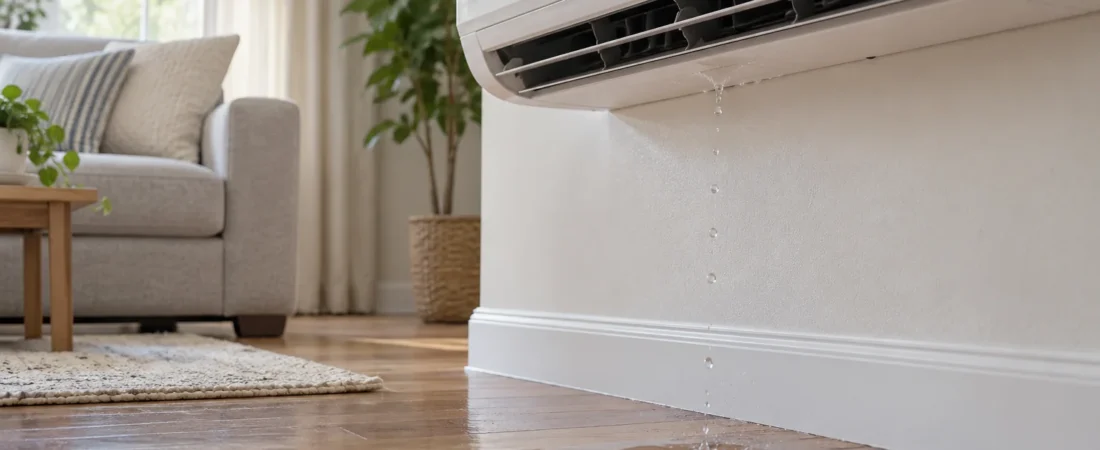
Water leaving an air conditioner’s intended drain is different from water dripping into the room or soaking a ceiling. First protect people and the building, then record where and when the leak appears. Central, ductless, window, and portable units handle condensate differently, so use the manual for your exact model.
Stop an active indoor leak safely
Stop cooling using the normal control if you can reach it safely. Do not approach or touch wet electrical equipment. Keep people away from water near outlets and away from a sagging ceiling. Arrange urgent professional help for electrical danger, significant flooding, or an unstable ceiling; an immediate fire or other emergency requires local emergency services. A bucket is temporary damage control, not a repair.
Water can continue dripping after cooling stops, so keep watching from a safe location and report that timing. Do not climb into an unsafe roof space, remove panels, puncture a ceiling, or restart the AC simply to reproduce the leak.
How condensate is supposed to leave the unit
Carrier’s linked explanation describes moisture collected at the indoor coil, a pan and condensate drainage. An obstruction can interrupt the route; a damaged pan can fail to collect water; ice can later melt. Similar puddles can therefore have different causes. Water is not a measure of refrigerant charge.
For central or ductless equipment, report the indoor unit and visible water route. For portable or window equipment, use its reservoir/installation instructions instead of copying another type’s drain-clearing method. Do not remove panels or drill an additional outlet.
When requesting service, distinguish water during cooling, continued dripping after shutdown and any ice already observed. Ask the technician to confirm the actual source and intended drainage path, including why ice formed if present. Do not restart the system just to reproduce the leak.
Identify the location without opening the equipment
Note whether water appears beneath the indoor unit, along an exposed insulated pipe, around a visible drain connection, at a ceiling stain, or outside at the designed drain outlet. Water can travel before becoming visible; a stain beside an AC is not proof that the AC caused it. Record whether rain or plumbing use also precedes the leak.
For a portable unit, check the manual’s reservoir or full-tank message and approved draining procedure. For a window unit, check the specified installation arrangement rather than drilling a new drain hole or changing its tilt by guesswork. If a heavy unit needs repositioning, use qualified help.
Use timing and visible signs to narrow the service request
Dripping during cooling can involve condensate drainage. Water after shutdown may include melting ice. Visible frost plus reduced cooling is a reason to stop operation and arrange service, not evidence of one particular fault. Photograph accessible ice without touching or chipping it.
Carrier’s guidance on AC water leaks describes blocked condensate drainage, freezing, and damaged collection pans as possible causes. These can produce similar indoor symptoms; inspecting the pan or hidden drain path may require a technician. Refrigerant is not the same as the visible condensate water, and a puddle cannot establish refrigerant charge.
Limit homeowner checks to the manual’s maintenance tasks
If conditions are safe, inspect a user-accessible filter with the equipment stopped as the manual directs. Use the correct filter and cleaning or replacement method. Note whether it was heavily obstructed, but do not assume replacing it has fixed a leak or a freezing problem. See the cooling guide if temperature performance has also changed.
You may look at an accessible, clearly identified condensate outlet from a safe position and record any obvious obstruction or displaced connection. Do not inject household drain cleaner, bleach, or compressed air into an unfamiliar line. Do not connect a vacuum to a pipe unless your model’s instructions permit the task and you know its connections. Bypassing a float switch can allow further flooding. If the drain’s route or access is unclear, leave clearing and testing to the technician.
What a lasting repair needs to establish
Ask the service provider to identify the source, restore the intended drainage path, and check operation after repair. If ice was involved, its cause needs assessment as well as removal of the resulting water. A dry floor immediately after shutdown does not demonstrate a repair.
Keep a record of affected surfaces and photographs taken safely. Wet materials may need assessment and drying separately from the AC repair. For stains that remain, see the ceiling-stain guide. Avoid painting over a wet area before the cause and condition of the material are established.
Details to provide when booking service
Report the model and system type, leak location, whether cooling was running, whether dripping continued after shutdown, visible ice, recent installation or maintenance, and any full-tank or fault message. Mention ceiling or wall damage and nearby electrics so the visit can be prioritized appropriately. Recurring leaks need investigation even when the water temporarily stops.