A sticking door usually needs diagnosis before it needs trimming. First separate a door edge rubbing on the frame or floor from a latch that will not retract or line up. The location of the resistance, the weather when it started, and whether other doors changed at the same time help you choose the next step.
Stop before adjusting a damaged or safety-critical door
Do not force a door with loose glass, a split frame, or a hinge pulling away. Keep fingers clear of hinges and closing edges. If the door is an essential exit and you cannot open it reliably, arrange prompt repair. Fire-rated doors, communal entrance doors, and doors with closers need a qualified installer; do not remove seals or trim them as a general DIY fix.
Find exactly where the resistance starts
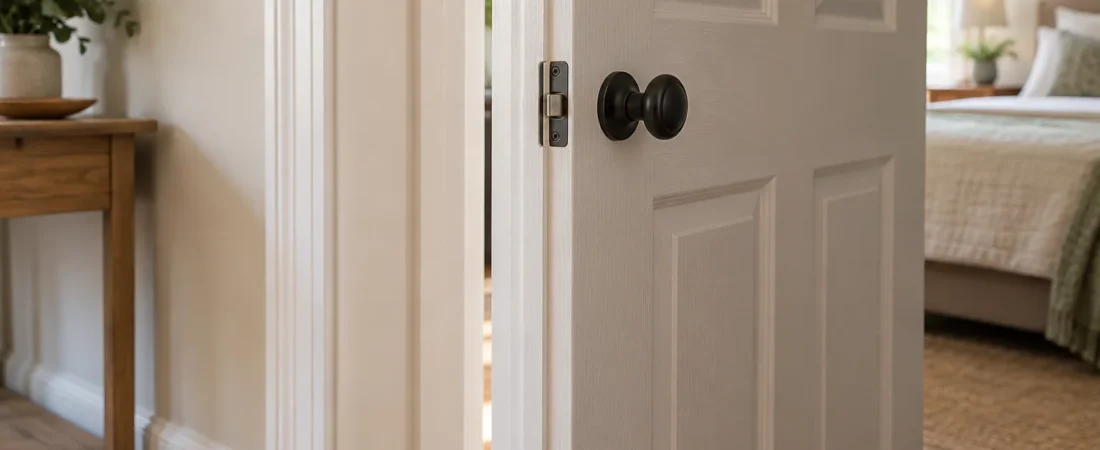
Open the door slowly, then close it with the handle held so the latch stays retracted. If it moves freely until you release the handle, investigate the latch or strike plate rather than sanding the door. If it still rubs, inspect the door perimeter for fresh scuff marks and an uneven gap. Use a flashlight; do not put fingers into a closing gap.
Make a short record: which edge touches, whether resistance happens throughout the swing or only near closure, and whether it began after rain, repainting, new flooring, or hardware work. A photo of the gap gives a carpenter something useful to compare later. These observations suggest possible causes; they do not establish that the building has structural movement.
Match the symptom to the next check
The latch-side corner rubs and the gaps look uneven
Check the hinges for an obvious loose screw or movement where the hinge meets the frame. With the door safely supported and stationary, a correctly fitting hand screwdriver can snug an accessible loose screw. Stop if the screw spins without gripping, the screw head is damaged, or the wood splits. Re-test after that small adjustment. Replacing screws, repairing stripped holes, or repositioning hinges may need a carpenter, especially on a heavy door.
The bottom scrapes the floor
Move a loose rug or obstruction and test again. If the problem started after new flooring, record that change before altering the door. If the hinge-side gap is also uneven, check alignment first. Trimming the bottom would not correct a loose hinge and could leave an unnecessary gap.
The door sticks mainly in damp weather
Wood can change with moisture, but a seasonal pattern is only a clue. Look for a wet sill, damaged finish, or water entering around the frame. Address an active leak before treating the door edge. Compare operation when conditions are drier. Do not repeatedly shave material off whenever the weather changes.
Painted surfaces grip near closure
Check whether the contact is at a visible paint ridge or whether newly painted surfaces are sticking together. Follow the coating manufacturer’s curing instructions. Do not sand an unknown old coating until its hazards have been assessed. If the actual gap is uneven, investigate alignment before blaming the paint.
Why trimming should come last
Door construction matters. JELD-WEN’s interior-door fitting guidance says trimming limits vary between products. Check the instructions for your exact door instead of using a universal clearance or cutting allowance. Its care guide also warns that doors can be heavy and need safe handling, and that exposed surfaces need an appropriate finish. Removing material or a door from its hinges is a separate job from these initial checks.
When a carpenter or building professional should inspect it
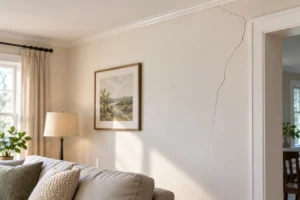
Arrange an inspection if a basic obstruction check and minor screw adjustment do not resolve the problem, the door or frame is visibly distorted, hardware no longer holds securely, or several openings change together. Tell the professional about new cracks, leaks, recent renovations, and how quickly the sticking developed. An isolated rub does not by itself diagnose a foundation problem. Avoid repeated DIY adjustments while an unexplained change is progressing.
Check the result before calling the job finished
After any small correction, open and close the door several times without pushing or lifting it. Check that the latch engages and releases normally and that the door remains usable for its intended purpose. If the resistance returns, record when and where; that is more useful than making a second unrelated adjustment.
If the door swings freely but will not latch, read why a door may not close properly. If the key or lock mechanism is the problem, use the door-lock troubleshooting guide instead.
Manufacturer references
For product-specific limits and maintenance, consult JELD-WEN’s interior-door fitting guidance and its Interior and Exterior Doors Care and Maintenance guide (PDF). The instructions supplied with your own door take priority over generic troubleshooting.