
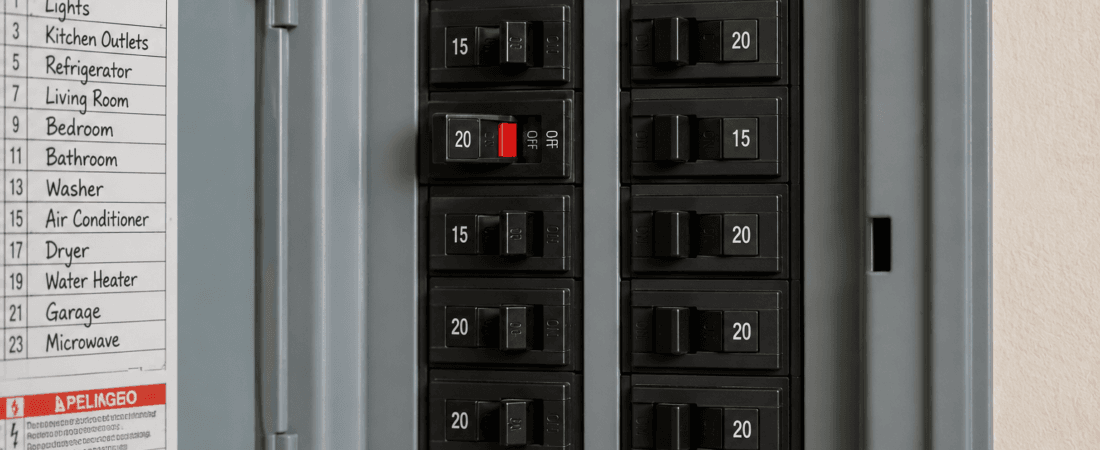
A circuit breaker is designed to shut off electricity when it detects conditions that could make a circuit unsafe.
A breaker that trips once may simply have responded to temporary overload. A breaker that repeatedly trips should not be ignored.
1. Consider What Was Running
Think about which appliances or devices were operating immediately before the breaker tripped.
High-power appliances used simultaneously on the same circuit can sometimes exceed what that circuit is designed to handle.
2. Unplug Some Devices
Turn off and unplug devices connected to the affected circuit.
If you know which breaker controls the circuit, you can reset it once by moving it fully to OFF and then back to ON.
Reconnect devices gradually rather than turning everything back on simultaneously.
3. Pay Attention to a Particular Appliance
If the breaker trips whenever one specific appliance or device is used, stop using that item until the cause is determined.
The problem could be with the appliance rather than the electrical circuit itself.
4. Don’t Keep Resetting the Breaker
A breaker that repeatedly trips is providing a warning.
Do not repeatedly force it back on without determining why it is shutting off.
5. Watch for Warning Signs
Take electrical problems particularly seriously if you notice:
- Burning smells
- Buzzing or crackling
- Sparks
- Warm or discolored outlets
- Melted plugs
- Smoke
- Repeated breaker trips
If there is smoke or an active electrical fire, leave the area and contact emergency services rather than attempting electrical repairs.
When Should You Call an Electrician?
Contact a qualified electrician if:
- The breaker trips repeatedly
- It trips immediately after being reset
- You cannot identify what is overloading the circuit
- An outlet or switch becomes hot
- You smell burning
- You hear buzzing or crackling
- You see damaged wiring or electrical components
Circuit breakers are safety devices. Repeated tripping should be treated as a symptom to investigate, not an inconvenience to bypass.