
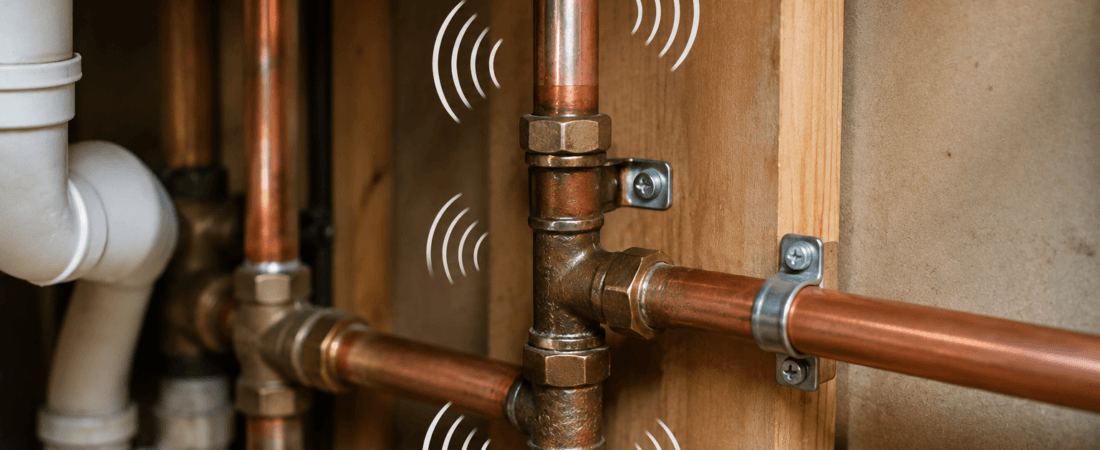
Pipes can make a surprising variety of sounds, including banging, knocking, whistling, rattling, and gurgling.
Some plumbing noises are relatively harmless, while others can indicate excessive pressure, loose pipes, drainage problems, or components that need attention.
Identifying when the sound occurs is one of the best ways to narrow down the cause.
1. Banging When Water Is Turned Off
A loud bang shortly after a faucet, washing machine, or other fixture shuts off may be related to a sudden change in water flow.
This is commonly associated with a plumbing effect known as water hammer.
Repeated severe banging should be investigated because the movement can put unnecessary stress on pipes and connections.
2. Rattling Pipes
Pipes may rattle when water flows through them if they are not adequately secured.
The sound may seem to come from inside a wall, ceiling, or floor.
Do not open walls simply to investigate a noise. A plumber can help determine whether pipe movement is the likely cause.
3. Whistling or Squealing
A whistling sound can sometimes be caused by water moving through a restricted opening or plumbing component.
If the sound happens only when one particular faucet, toilet, or appliance operates, that fixture may help identify the source.
4. Gurgling From Drains
Gurgling from a sink, shower, bathtub, or toilet may indicate that air is moving through the drainage system unusually.
An occasional minor sound may not indicate a serious problem, but frequent gurgling combined with slow drainage or backups deserves attention.
5. Sounds From the Toilet
If the noise comes from the toilet after flushing—or when nobody has used it—the components inside the tank may be involved.
A toilet that periodically refills by itself may also be losing water from the tank and should be inspected.
6. Pay Attention to Changes
Plumbing systems normally make some noise.
What’s more important is a new sound, a sound that is becoming louder, or one accompanied by another symptom such as:
- Low water pressure
- Leaking
- Slow drains
- Water stains
- Repeated toilet problems
- Drain backups
Those combinations provide useful clues that something has changed in the plumbing system.
When Should You Call a Plumber?
Consider calling a licensed plumber if:
- Banging is severe or happens frequently
- Pipes visibly move or vibrate
- The noise suddenly appeared
- Gurgling occurs with slow or backed-up drains
- You notice leaking or water damage
- Several fixtures are affected
- You cannot determine where the sound originates
Not every plumbing noise signals an emergency, but persistent or unusual sounds should not simply be ignored. Identifying when and where the noise occurs can help determine whether you’re hearing normal plumbing operation or a problem that needs attention.