
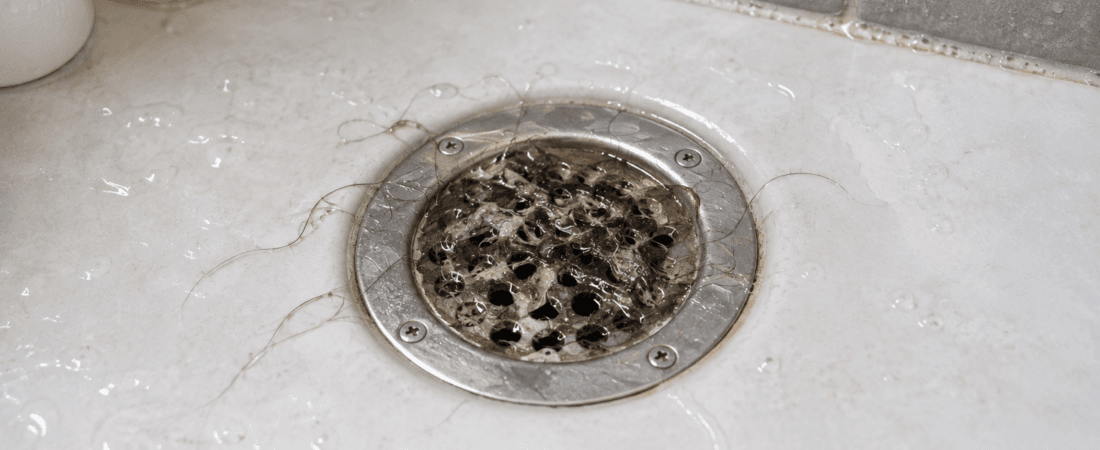
A clogged shower drain usually develops gradually. You may first notice water draining more slowly than usual before eventually finding yourself standing in water during a shower.
Hair and soap buildup are common causes, but recurring or severe drainage problems can sometimes indicate a blockage farther inside the plumbing system.
1. Remove Visible Hair and Debris
If your shower drain has a removable cover, inspect the area around the opening.
Hair, soap residue, and other debris often collect close to the top of the drain.
Remove anything you can safely reach without pushing it farther into the pipe.
Wear gloves when handling material removed from a drain.
2. Clean the Drain Cover
Soap residue and hair can accumulate around the openings in the drain cover itself.
Remove and clean the cover if it is designed to come off easily.
This may not clear a deeper clog, but it can improve drainage when buildup is concentrated near the surface.
3. Try a Plunger
A plunger may help loosen a blockage located near the shower drain.
Add enough water to cover the bottom of the plunger, create a seal over the drain, and plunge several times.
If another nearby opening prevents you from creating a good seal, plunging may be less effective.
4. Avoid Mixing Drain-Cleaning Chemicals
Be careful with chemical drain cleaners.
Never mix different drain-cleaning products or combine them with other household chemicals. Dangerous reactions can occur.
Chemical cleaners can also make subsequent plumbing work more hazardous if the clog remains.
5. Watch for Other Slow Drains
Pay attention to the other fixtures in your home.
If the shower drain is slow along with a sink, bathtub, or toilet, the problem may not be limited to the shower.
Multiple affected fixtures can indicate a blockage farther along the drainage system.
6. Pay Attention to Recurring Clogs
A shower drain that becomes clogged repeatedly may have more than ordinary surface buildup.
Recurring problems can be caused by buildup deeper inside the pipe or another issue that requires the drain line to be inspected.
When Should You Call a Plumber?
Consider calling a licensed plumber if:
- The shower will not drain
- The clog repeatedly returns
- Several drains are slow at the same time
- Water backs up into another fixture
- You hear unusual gurgling from drains
- There is a sewage odor
- You cannot safely reach or clear the blockage
Removing visible hair and debris can solve many ordinary shower clogs. However, repeated or widespread drainage problems may indicate a blockage that needs professional attention.