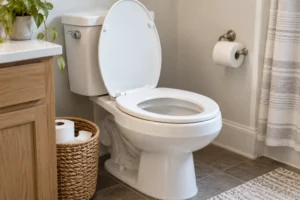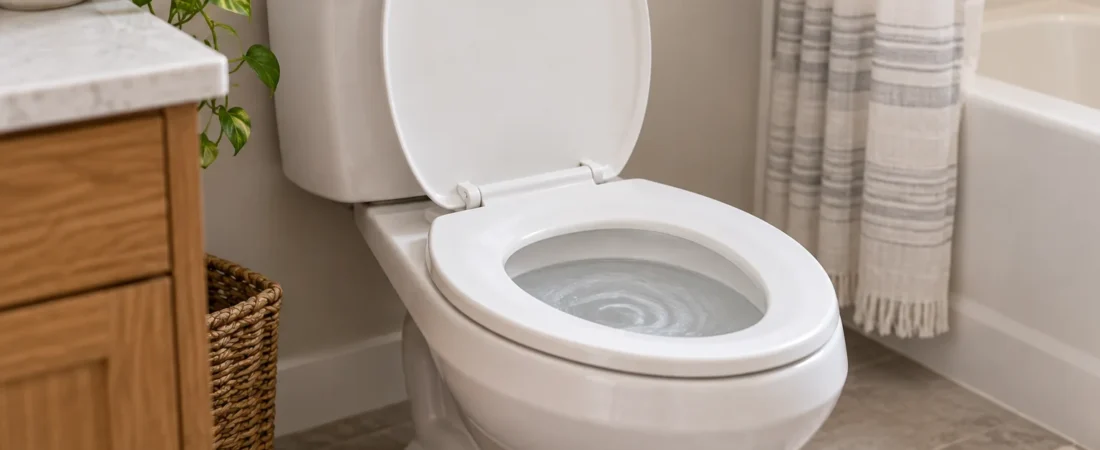
If the bowl rises after a flush, do not flush again. First decide whether this is one contained toilet blockage, a known object in the bowl, or a wider drainage backup. The immediate goal is to prevent overflow and choose a safe next step, not force more water through an unknown obstruction.
Stop incoming water and keep the area clear
Do not add water to a high bowl. A familiar accessible toilet shutoff can limit tank refill if it works gently; do not force a corroded or seized valve. Closing the supply does not remove water already in the tank or prevent backup from a shared drain. Tell others not to use the toilet.
Keep children and pets away from wastewater. Do not touch electrical equipment if water has spread nearby. Overflow, a leaking or cracked toilet, sewage in another fixture, or an uncertain shared drain requires prompt plumbing help. Report the problem to the responsible manager in a shared building.
If chemicals or a hard object may be present
Do not plunge or use a cable if chemical cleaner was added. Do not add another cleaner or attempt to neutralise it. Tell the plumber the product, amount and time used. For an exposure, obtain local poison-control or emergency medical advice and keep the container information available.
If a toy or other hard object is known to have fallen in, do not push it farther with a plunger. A plainly visible, safely reachable object may be removed with protective gloves, but do not reach deeply into the trapway or use improvised hooks. When access is uncertain, leave retrieval to a plumber.
If more than this toilet is affected
Note whether sinks, showers or another toilet are also backing up, particularly whether a lower fixture rises when another is used. Stop adding water to the affected system and arrange assessment. Do not continue plunging one bowl while a shared drain is backing up.
Strong sewer odors or an unsafe atmosphere also warrant leaving the affected area and obtaining appropriate help. Do not open unfamiliar cleanouts or climb onto the roof to investigate venting. A plumber can decide whether downstream drainage, venting or another part of the system needs inspection.
When a brief plunger attempt is appropriate
For one stable toilet with a contained likely soft blockage, no chemicals and no known hard object, a compatible toilet plunger may be a suitable owner tool. Wear gloves, protect against splashes and ensure there is safe room in the bowl. Do not proceed if inserting the tool would cause overflow.
Korky’s toilet-plunger guidance explains the importance of a toilet-shaped sealing head, allowing it to fill with water and using controlled push-pull movement. A flat sink cup may not seal the toilet outlet. Follow the tool’s instructions and maintain the seal without forceful splashing.
Make a brief controlled attempt, then stop to see whether the level falls. Do not escalate to repeated aggressive strokes if the toilet moves, leaks or the water does not improve. A bowl that slowly empties may still have a partial obstruction; it is not automatically ready for another full flush.
If the blockage does not clear
Arrange plumbing help and report the previous attempts. A toilet auger differs from a general drain cable and must suit the fixture and obstruction. Powered equipment, toilet removal and concealed-line work require additional skill and safeguards. Do not use compressed air, boiling water or sharp household tools to force a result.
Give the plumber the model, recent flush behavior, possible material flushed and whether other drains are affected. Ask where the obstruction was found and whether it was removed or only displaced. Keep any recommendation for further inspection if drainage remains abnormal.
Resume use cautiously and address recurrence
Once drainage is judged clear and the bowl is at its normal level, check ordinary operation without deliberately adding a large load of paper. Stop immediately if it rises abnormally again. Inspect the toilet base and surrounding area for fresh leakage after the work.
Clean affected surfaces and equipment appropriately without mixing products. If clogs recur, use the recurring-clog guide to record the pattern and investigate the cause. Repeated emergency plunging is not a long-term repair for a persistent obstruction or installation problem.