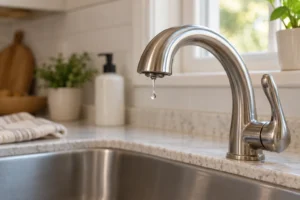
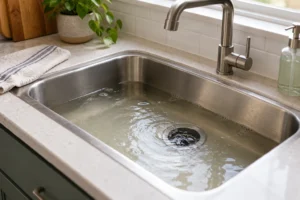
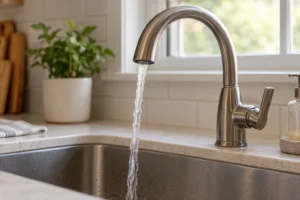
Separate a leak that continues with the faucet off from one that appears during water use or when the basin drains. Supply connections, faucet hoses, drain fittings and water passing around the sink edge have different leak paths. Do not tighten every connection before establishing where fresh water first appears.
Stop water use when damage or electrical exposure is possible
If water is spraying, spreading quickly or reaching sockets, a disposal or other electrical equipment, stop using the area and arrange appropriate help. Do not touch wet plugs, appliances or controls. A familiar accessible shutoff may limit a supply leak if it operates safely without force; do not disconnect a live hose.
Keep children and pets away, and report the problem to the responsible manager in a rented or shared property. Do not continue operating a connected dishwasher while the cabinet is leaking. A damaged cabinet floor or unstable fitting also makes an owner investigation unsuitable.
Supply water and drain water follow separate routes
The supply side can leak while the faucet is off. The drain side carries water leaving the basin. Water tracking down from above can make a lower joint look guilty. Use the first visible wet point and the timing together; neither is a complete diagnosis alone.
Moen’s under-sink faucet guidance distinguishes continuous supply-side leakage from leakage associated with faucet use. For the waste side, Oatey’s P-trap explanation identifies the tailpiece, bend and wall-tube connections. These are different connection families, not a single instruction to tighten every nut.
Make an observation record without creating another leak
Where the cabinet is safe, move dry stored items out of the way without pulling on hoses. Dry accessible sound surfaces and photograph the fittings. Note which area becomes wet first, whether the faucet is off, and whether water follows the outside of a pipe from above.
A brief ordinary-use observation is appropriate only for a small contained problem without electrical or damage concerns. Stop immediately if leakage resumes. Do not fill the whole basin, deliberately flood the counter or leave water running unattended to reproduce the fault. The timing can guide a plumber even when the source is not visible.
If it leaks with the faucet off
Report wetness at the shutoff, supply hose, faucet connection or a hose serving a connected appliance. A supply under pressure can leak independently of sink drainage. Look for corrosion or hose damage visually; do not bend the hose or scrape a fitting to test its strength.
If closing a familiar functioning supply valve stops the leak, keep it isolated until repaired. A leak from the valve itself or uncertain isolation requires a plumber. Replacement hoses and connectors need compatible specifications; a coating of sealant is not a repair for a damaged pressure hose.
If it appears while the faucet runs
Observe whether water comes from a moving spray hose, a faucet connection or above the sink underside. Keep the model and describe whether hose movement changes the symptom, without continuing to move a leaking hose. The faucet guide separates spout and body leaks.
Ask the manufacturer or plumber to identify the actual faucet hose and fitting before adjustment. Moen’s under-sink example shows that hose configurations vary by model; its parts advice is not a repair method for every sink. Do not add tape or glue to an unknown connection.
If leakage begins as water drains
Report the first wet point around the drain body, stopper linkage, trap or wall connection. Water running down from above can make a lower joint appear to be the source. Loose-looking fittings, displaced washers and cracked components need different corrections.
Do not dismantle a trap that may contain chemicals or contaminated water. If cleaner was used, tell the plumber the product and amount and stop further attempts. For a simple owner-maintenance task, the fitting type, retained water and reassembly method must be understood. Leave corroded, damaged or unfamiliar connections to a professional.
If the cabinet gets wet after counter or appliance use
Note whether ordinary splashes around the sink edge, a dishwasher cycle or a nearby appliance precedes wetness. Do not assume a drain leak when the water may arrive from another route. Report the sequence and any accessible first wet point.
Sink-rim sealing and appliance hose repairs require their own installation instructions. Caulking over the cabinet’s wet area or tightening a drain connection will not correct water entering around the rim or from a separate hose. A sink or fitting that is loose needs appropriate assessment before sealing.
Verify the repair and assess the cabinet
After safe work, check disturbed connections with the relevant ordinary use and with the faucet off. Keep the repair record and monitor for renewed wetness. Ask whether softened cabinet material, nearby finishes or concealed wetness need repair or drying assessment.
If the leak returns, give the plumber the original timing, repaired component and first wet point. A dry tray underneath can catch a minor drip temporarily, but it does not establish that the source or water damage has been resolved.