
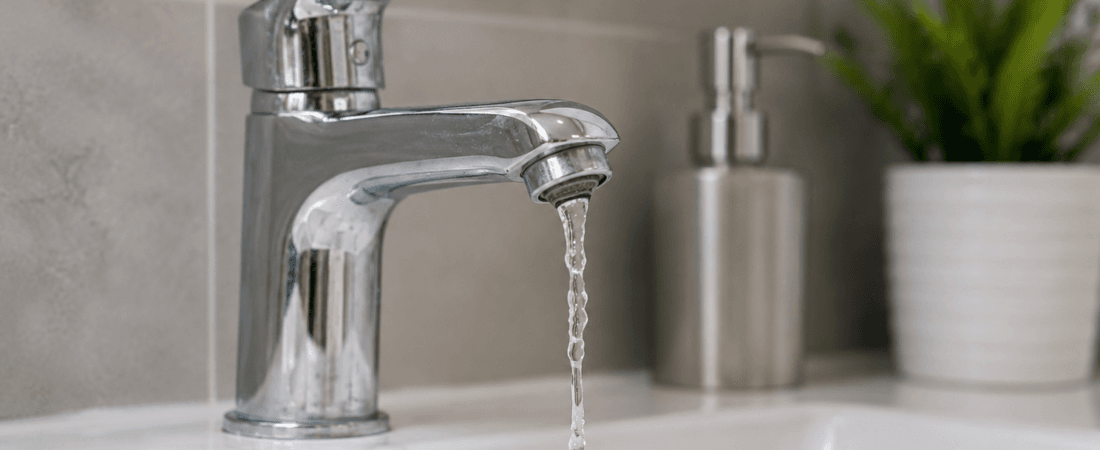
Low water pressure can make everyday tasks like showering, washing dishes, and filling a sink take much longer than they should. Sometimes the problem affects only one faucet or shower, while other times the entire home has weak water pressure.
Before calling a plumber, there are a few simple things you can check.
1. Check Whether the Problem Is in One Fixture
Turn on several faucets around your home.
If the low pressure affects only one faucet or shower, the problem is likely with that particular fixture rather than your home’s entire plumbing system.
If the pressure is low everywhere, the cause may be somewhere in the main water supply or plumbing system.
2. Clean the Faucet Aerator
Mineral deposits and debris can collect inside the small screen at the end of a faucet.
Unscrew the aerator, rinse away any visible debris, and clean off mineral buildup before reinstalling it.
If the water pressure improves, a clogged aerator was probably the cause.
3. Check the Showerhead
A showerhead can also become clogged with mineral deposits over time.
Remove the showerhead if possible and inspect the small openings for buildup. Cleaning the showerhead may restore normal water flow.
4. Make Sure the Main Water Valve Is Fully Open
Your home’s main water shutoff valve controls how much water can enter the plumbing system.
If it was recently adjusted or partially closed, water pressure throughout the house may decrease.
Check that the valve is fully open. Do not force it if it is stuck or difficult to turn.
5. Consider Whether There Is a Leak
A hidden plumbing leak can sometimes reduce water pressure.
Look for warning signs such as:
- Unexplained increases in your water bill
- Damp spots on walls, ceilings, or floors
- Water stains
- Sounds of running water when fixtures are turned off
- Unusually wet areas outside the home
A suspected hidden leak should be investigated promptly.
6. Check Whether Your Neighbors Have the Same Problem
If the pressure suddenly becomes low throughout your home, the issue may be coming from the local water supply rather than your plumbing.
Ask a nearby neighbor whether they are experiencing the same problem. Utility maintenance or temporary supply issues can sometimes cause reduced pressure.
When Should You Call a Plumber?
Consider calling a licensed plumber if:
- Water pressure is low throughout the entire home
- The pressure suddenly dropped without an obvious reason
- You suspect a hidden leak
- Pipes are leaking or damaged
- The main valve appears damaged or stuck
- Simple fixture cleaning does not solve the problem
Low water pressure does not always mean there is a serious plumbing problem. Starting with the individual faucets and showerheads can help you determine whether the issue is something simple or whether professional help may be needed.