
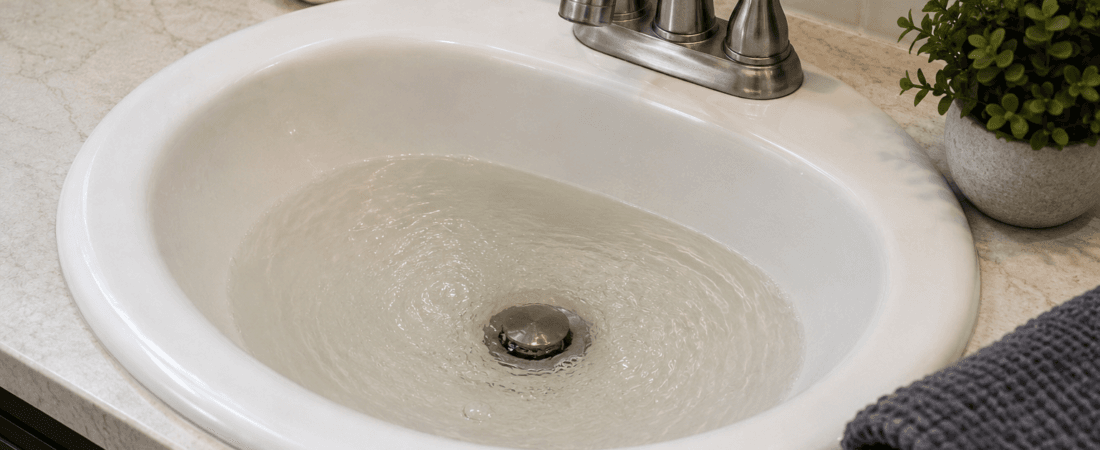
A slow-draining sink is one of the most common household plumbing problems. Water may sit in the basin for several seconds or even minutes before disappearing. In many cases, the cause is a buildup close to the drain that you may be able to clear yourself.
1. Check for Hair and Debris
Bathroom sinks commonly become clogged with hair, soap residue, toothpaste, and other debris.
Remove any visible material around the drain opening. If your sink has a removable stopper, take it out and check underneath it, as debris often collects there.
2. Clean the Sink Stopper
Even when the drain itself isn’t completely blocked, buildup around the stopper can restrict water flow.
Remove the stopper if possible and clean away any hair, soap scum, or grime. Rinse it thoroughly before putting it back in place.
3. Try a Plunger
A small sink plunger can sometimes loosen a blockage near the drain.
Add enough water to cover the bottom of the plunger, place it firmly over the drain, and plunge several times. If the sink has an overflow opening, covering it with a damp cloth while plunging can help create better suction.
4. Check the P-Trap
The curved pipe underneath your sink is called the P-trap. Its shape allows it to hold a small amount of water, which helps prevent sewer gases from entering your home.
Debris can also collect inside the P-trap and slow the drain.
If you’re comfortable removing it, place a bucket underneath first because water will spill out. Clean the trap and reinstall it securely.
5. The Blockage May Be Deeper
If cleaning the stopper and P-trap doesn’t solve the problem, the blockage may be farther down the drainpipe.
A drain snake or hand auger may be able to reach deeper buildup. Avoid forcing tools into the drain if you’re unsure how to use them, as improper use can damage plumbing components.
When Should You Call a Plumber?
Consider calling a plumber if the sink remains slow after basic cleaning, becomes completely blocked, repeatedly clogs, or if several drains in your home are draining slowly at the same time.
Multiple slow drains can indicate a larger problem with the home’s drainage system.
The Bottom Line
A slowly draining sink is usually caused by hair, soap residue, grease, or other debris restricting the flow of water.
Start by checking the stopper and the area immediately around the drain. If the problem continues, the P-trap or a deeper section of the drainpipe may need attention.