
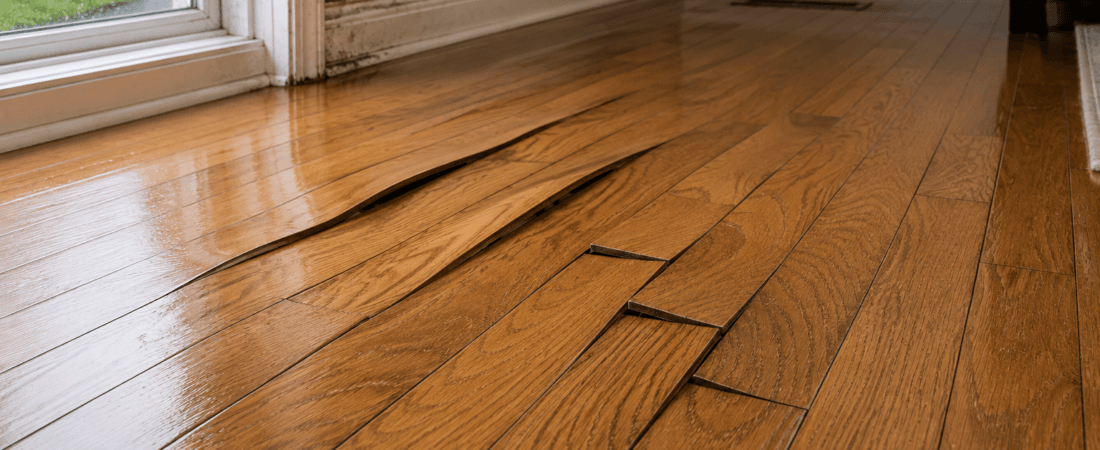
Hardwood flooring can buckle, cup, or lift when the wood expands and no longer has enough room to remain flat.
Excess moisture is one of the most important causes to investigate.
1. Check for Water
Look for recent or ongoing sources of moisture such as:
- Plumbing leaks
- Appliance leaks
- Flooding
- Water entering through doors or windows
- Wet subflooring
Stop active water intrusion as quickly as it can be done safely.
2. Consider Indoor Humidity
Wood naturally expands and contracts as humidity changes.
Extremely humid conditions can cause flooring to absorb moisture and expand.
3. Don’t Force the Boards Flat
Heavy objects or improvised fasteners should not be used to force severely buckled flooring back into position.
The underlying moisture problem needs to be addressed first.
4. Check the Extent of the Damage
A small affected area near a known spill may have a different cause from widespread buckling across an entire room.
Look for staining, dampness, or other signs of water damage.
5. Allow the Area to Dry Properly
Drying the affected area is important, but severe water intrusion may also require assessment of the subfloor and surrounding materials.
When Should You Call a Professional?
Consider professional help if:
- Flooring is significantly raised
- A large area is affected
- The subfloor may be wet
- The source of moisture is unknown
- Mold or a musty odor develops
- The floor remains distorted after moisture conditions are corrected
Repairing the visible flooring without correcting the moisture source can allow the problem to return.