
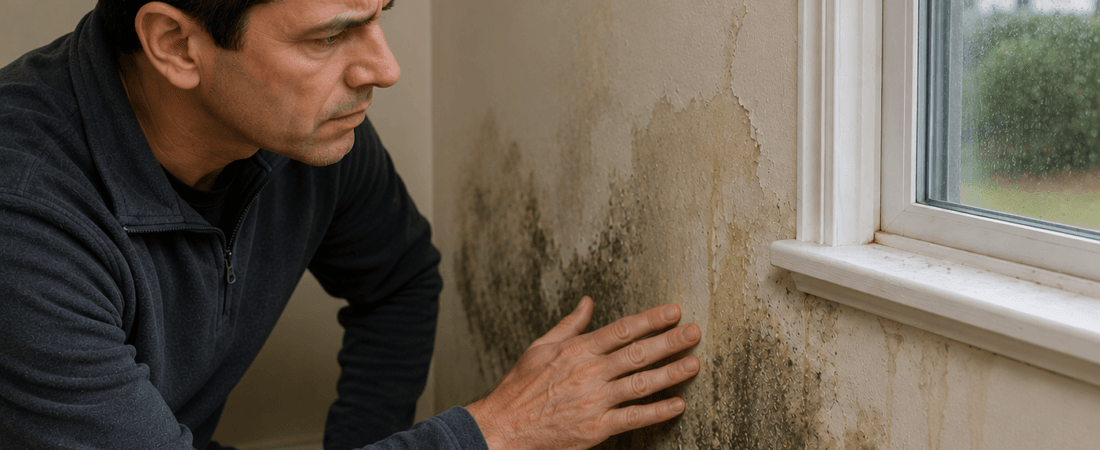
A damp patch on a wall should not be ignored.
The moisture may come from plumbing, rainwater, condensation, or another source, and prolonged dampness can damage building materials.
1. Note When the Dampness Appears
Consider whether the wall becomes wet:
- During or after rain
- When a shower is used
- When plumbing fixtures operate
- When the AC runs
- Continuously
Timing can provide important clues.
2. Check Nearby Plumbing
If the damp area is near a bathroom, kitchen, laundry room, or plumbing fixture, a leaking pipe or connection may be involved.
Do not open walls unless necessary and appropriate.
3. Check the Exterior
For an exterior wall, inspect accessible areas outside for obvious cracks, damaged seals, roof or gutter problems, or other potential paths for rainwater.
Avoid climbing onto roofs or unsafe ladders to investigate.
4. Consider Condensation
High indoor humidity can cause moisture to collect on cold walls or surfaces.
This is particularly common in poorly ventilated spaces.
5. Look for Signs of Damage
Watch for:
- Bubbling paint
- Peeling paint
- Stains
- Soft drywall
- Musty odors
- Mold growth
- Swollen trim
These can indicate that the problem has existed for some time.
When Should You Call a Professional?
Seek professional help if:
- The wall remains wet
- The damp area is expanding
- You suspect a hidden plumbing leak
- Water enters during rain
- Mold is developing
- Electrical outlets or wiring are near the wet area
- Wall materials are becoming soft or damaged
Finding and stopping the moisture source is more important than simply repainting or covering the affected area.