
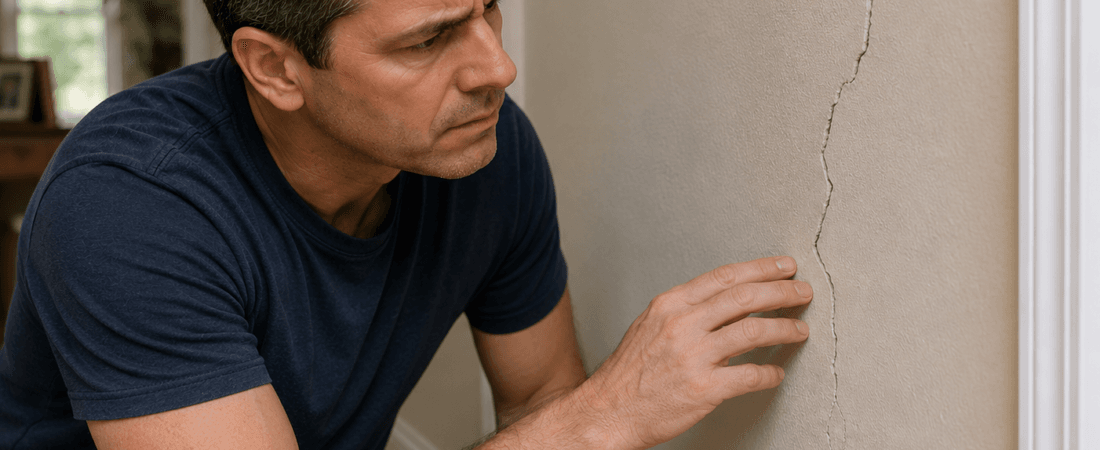
Small cracks can develop in walls for many reasons, including normal movement of building materials.
Not every crack indicates a structural problem, but some patterns deserve professional attention.
1. Look at the Size of the Crack
Very fine cracks in paint or drywall finishes can occur as materials expand, contract, or settle.
Larger or widening cracks deserve closer attention.
2. Look at the Direction
Note whether the crack is:
- Vertical
- Horizontal
- Diagonal
- Following a drywall joint
- Extending from a door or window
The pattern can provide useful information when the problem is assessed.
3. Check Whether It Is Changing
Take a photograph and note the date.
If the crack becomes noticeably wider or longer over time, professional assessment may be appropriate.
4. Look for Other Symptoms
Pay particular attention if cracks occur along with:
- Doors or windows suddenly sticking
- Uneven floors
- Separation around frames
- Ceiling cracks
- Water damage
- Visible movement in walls
A combination of symptoms can be more significant than an isolated cosmetic crack.
5. Check for Moisture
Water intrusion can damage drywall and finishes and may contribute to cracking.
Staining, softness, bubbling paint, or dampness around a crack should be investigated.
When Should You Call a Professional?
Consider professional assessment if:
- A crack is large or rapidly widening
- Several new cracks appear
- Cracks occur with sticking doors or windows
- Walls appear to move or separate
- The crack is accompanied by significant water damage
- You are concerned about structural movement
Cosmetic cracks can often be repaired, but it is important to identify the cause before repeatedly covering a crack that continues to return.