
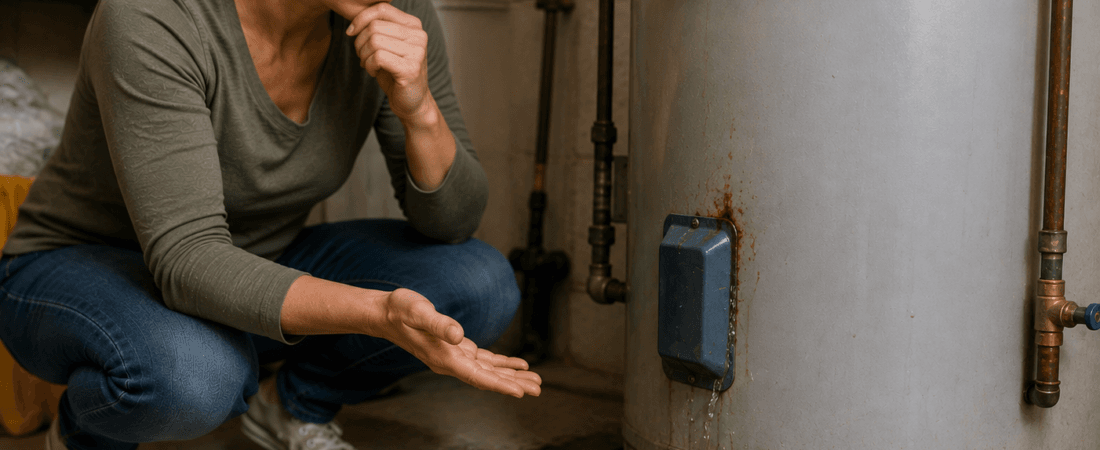
Water around a water heater should be investigated promptly.
Even a relatively small leak can eventually damage floors, walls, ceilings, and nearby belongings.
1. Confirm the Water Heater Is the Source
Water can travel across floors or along pipes.
Check whether the moisture is actually originating from the heater rather than nearby plumbing, condensation, or another appliance.
2. Look at Accessible Pipe Connections
Without dismantling anything, inspect visible plumbing above and around the heater.
Moisture around a connection may indicate where the leak originates.
3. Check Around the Base
Water collecting around the bottom of a tank-style water heater can indicate several possible problems.
If the tank itself has deteriorated and is leaking, replacement may be necessary.
4. Don’t Ignore the Pressure-Relief System
Water heaters have safety components designed to manage excessive temperature and pressure.
Do not plug, cap, or disable a pressure-relief valve or its discharge pipe in an attempt to stop water.
A leaking safety valve should be properly diagnosed.
5. Be Careful Around Electricity
If water is reaching electrical wiring, outlets, controls, or other energized equipment, keep away from the wet area.
Do not stand in water while attempting to unplug or operate electrical equipment.
6. Protect the Property
If the leak is substantial and you can safely identify the correct water shutoff, stopping the water supply may reduce property damage while you arrange repairs.
Do not take risks around electrical or gas equipment to reach a valve.
When Should You Call a Professional?
Seek qualified plumbing or water-heater service if:
- Water is continuously leaking
- The tank itself appears to be leaking
- The pressure-relief valve repeatedly releases water
- Water is reaching electrical components
- You smell gas
- The heater is rusted or corroded
- You cannot determine where the water originates
A leaking water heater can worsen quickly, so persistent or substantial leaks should not be postponed.