
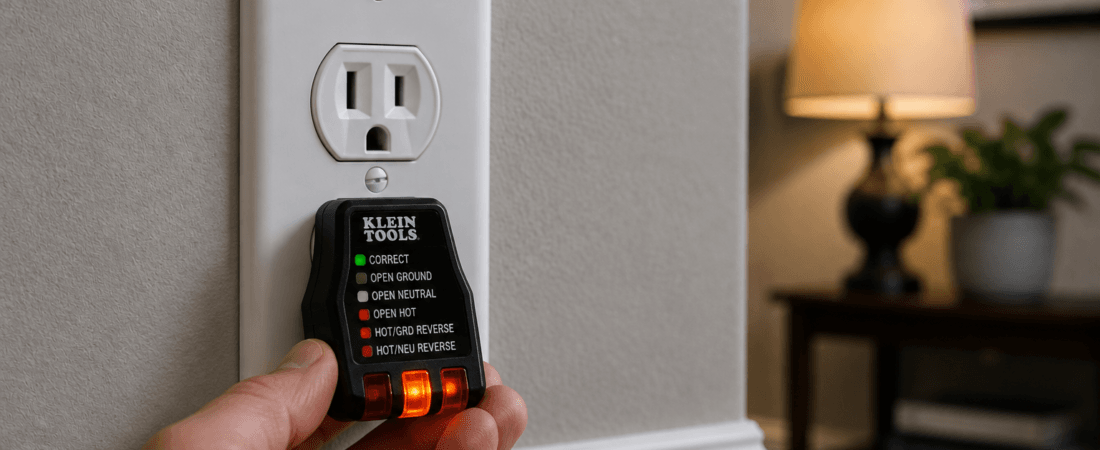
Finding one electrical outlet that suddenly has no power does not always mean the outlet itself has failed.
The cause may be a tripped breaker, a GFCI outlet, a switched outlet, or another electrical problem.
1. Test Another Device
First, make sure the appliance or charger you are using actually works.
Try it in another known-working outlet.
This helps determine whether the problem is the outlet or the device.
2. Check Nearby Outlets
Determine whether only one outlet has stopped working or whether several outlets in the same room or area are affected.
Multiple dead outlets may point to a circuit-level problem.
3. Check for a Wall Switch
Some outlets are controlled by wall switches.
Try nearby switches to determine whether the outlet was accidentally switched off.
4. Check GFCI Outlets
Bathrooms, kitchens, garages, outdoor areas, and other locations may use GFCI protection.
A GFCI outlet usually has TEST and RESET buttons.
If one has tripped, other outlets connected downstream may also lose power.
If the GFCI will not reset or immediately trips again, do not repeatedly force it.
5. Check the Circuit Breaker
Look for a tripped breaker in the electrical panel.
If you know which breaker controls the circuit, reset it once by moving it fully to OFF and then back to ON.
If it immediately trips again, leave it off and contact an electrician.
6. Inspect for Obvious Damage
Do not use an outlet that is:
- Burned or discolored
- Cracked
- Loose
- Sparking
- Buzzing
- Unusually warm
- Giving off a burning smell
Do not insert tools or objects into an outlet to test it.
When Should You Call an Electrician?
Contact a qualified electrician if:
- The outlet remains dead after basic checks
- A GFCI will not reset
- A breaker repeatedly trips
- Several outlets lose power
- The outlet is hot or discolored
- You hear buzzing or crackling
- You smell burning or see sparks
Electrical outlets can carry dangerous voltage even when they appear to be malfunctioning. Leave internal wiring diagnosis and repair to a qualified professional.