Guides
Find a guide that matches the symptom you can observe. Each guide explains useful information to record, checks within an owner’s scope and when qualified help is needed. Choose a category below or browse the articles.
-
Why Is My Electricity Bill Suddenly So High?

Compare the electricity used before blaming an appliance. A larger amount due can reflect more kilowatt-hours, a longer billing period, a different rate, an estimated reading correction, or other charges. Keep the current bill and a comparable earlier bill beside each other and work through the differences. Separate the amount due from energy used On…
Read the guide: Why Is My Electricity Bill Suddenly So High?
-
Why Is My Electrical Outlet Not Working?
A dead outlet can result from a switched receptacle, a tripped protective device, a faulty appliance, or a problem in the wiring. The useful first distinction is whether one device, one outlet, or several outlets have lost power. Check for danger before testing anything. Stop before testing if there are warning signs Do not plug…
-
Why Are My Lights Flickering?
Start with the extent of the flicker: one replaceable bulb, one group controlled by a dimmer, or lights in several rooms. Also note whether it began after a bulb change or occurs when equipment starts. Those observations narrow the service question; they do not prove the wiring is safe. Stop for electrical warning signs Stop…
-
Why Does My Circuit Breaker Keep Tripping?
A breaker that repeatedly trips needs investigation. The pattern can help an electrician, but it cannot tell a homeowner whether the cause is excess load, an appliance fault, damaged wiring, or the protective device. Do not reproduce the trip by repeatedly switching things on. Stop before resetting if there are warning signs Stay away from…
-
Why Is My Ceiling Fan Not Working?
A ceiling fan that does not respond can have a control problem, loss of power, or a fault needing repair. Begin by noting what still works: the light, pull chain, remote, or wall control. The light operating does not prove that the motor or its control circuit is healthy. Use the manual for the fan…
-
Why Is One Room Hotter Than the Others?
A room that stays warmer than neighboring rooms can have a local airflow, solar-gain, or building-envelope problem even when the cooling equipment works. The most useful evidence is a consistent pattern: time of day, door position, airflow, and how the room compares with the rest of the home. Start with observations before changing equipment or…
-
Why Does My AC Keep Turning On and Off?
An air conditioner normally starts and stops as cooling demand changes. The concern is repeated premature shutdown and restart, especially when the room remains warm or humid. Before calling it short cycling, distinguish a change in fan speed from the whole system stopping and record what the thermostat is asking the equipment to do. Stop…
-
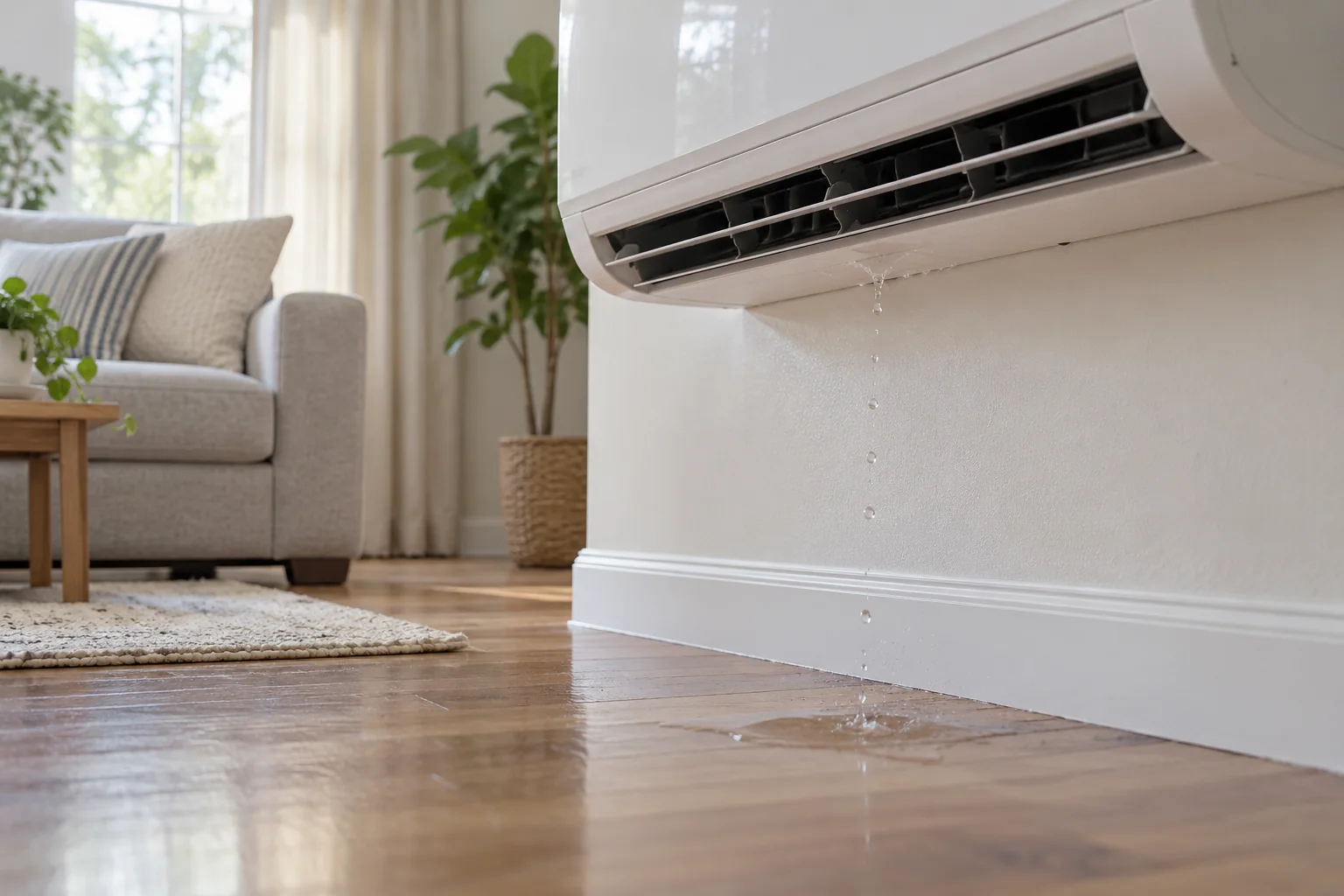
Why Is My Air Conditioner Leaking Water?
Water leaving an air conditioner’s intended drain is different from water dripping into the room or soaking a ceiling. First protect people and the building, then record where and when the leak appears. Central, ductless, window, and portable units handle condensate differently, so use the manual for your exact model. Stop an active indoor leak…
-
Why Is My Air Conditioner Not Cooling?
When an air conditioner is running but the home stays warm, distinguish three patterns: little air reaches the room, air moves but is not cool, or cool air reaches some rooms while others remain hot. The indoor fan running does not establish that the cooling system is operating. This guide covers normal user controls and…
-
Why Are My Pipes Making Noise?
Describe the timing as well as the sound: a bang as a valve shuts, a whistle while water flows, a tick after hot-water use or a gurgle as a fixture drains. These patterns concern different parts of the plumbing. Do not assume every noise is water hammer or adjust pressure without measurements. Look for leakage…